In the construction world, precision is everything. A minor mistake in measurement, component placement, or design interpretation can snowball into costly rework, delayed delivery, and stress across the project team. Traditional workflows often rely on 2D drawings, disconnected documentation, and manual interpretation, which leaves room for misunderstanding—especially in large or complex developments. Today, BIM Augmented Reality (AR BIM) is changing that landscape by bringing design data directly to the construction site through digital overlays.
With platforms like BuildX, construction teams can access real-time project models through AR devices, enabling workers to see design elements exactly where they should appear in the physical environment. This integration significantly improves accuracy, reduces friction between design and execution, and ensures construction progress aligns with digital planning.
Below are five powerful ways BIM Augmented Reality improves on-site accuracy, helping teams build faster, smarter, and with fewer mistakes.
1. Visualizing Digital Models in Real-World Context
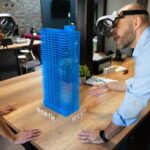
One of the most transformative aspects of BIM Augmented Reality is the ability to place 3D design models directly within the construction site. Instead of relying solely on drawings or static renderings, AR BIM allows project teams to look at the real environment and see digital components aligned to their intended positions. This eliminates the guesswork that often comes from interpreting technical drawings and attempting to mentally translate them into actual space.
When a worker looks at partially completed walls, MEP installations, or structural elements through an AR-enabled device, they can instantly understand how the completed design should exist in the physical space. This real-time visualization dramatically reduces the chance of misalignment or misinterpretation. Workers do not need to interpret layers of separate documents—they see the information precisely where it belongs.
BuildX enhances this visualization by connecting AR BIM with cloud project management, ensuring the most recent model is always available. This solves another challenge often faced in construction: changes in design may not reach everyone at the same time, which can lead to outdated plans being used on-site. With AR BIM, revisions are instantly reflected in the model, and teams always reference the latest version.
This enhanced understanding leads to fewer planning missteps, smoother execution, and a stronger alignment between design intent and built reality. It brings a level of clarity to construction that traditional methods simply cannot match, making real-world delivery more predictable and reliable.
2. Detecting Design and Installation Errors Early
A major source of project delays comes from discovering errors only after installations are complete. Rework not only adds material waste and labor cost—it also disrupts scheduling, supply chains, and CAD/BIM workflow continuity. By using BIM Augmented Reality, construction teams can perform early validation before committing materials or manpower, significantly reducing these risks.
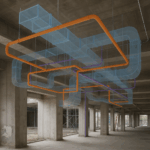
When AR BIM overlays digital models onto physical components, discrepancies immediately become visible. If a mechanical pipe, duct, or wall frame is out of position, the difference between the expected BIM model and the real-world build can be identified instantly. Instead of identifying clashes after installation, workers can adjust their work before the mistake becomes costly.
This early detection helps supervisors maintain tighter control over quality and sequencing. It allows site teams to check alignment, measurements, and fit within seconds, without needing additional surveying equipment or manual analysis. BuildX complements this process with integrated reporting—any deviation can be documented, assigned to team members, and resolved quickly, preventing minor issues from escalating into major delays.
Additionally, this approach supports continuous improvement. Contractors gain better insight into recurring installation problems, helping them refine team processes, planning, and communication. Over time, construction becomes not just more accurate, but more strategic and proactive, minimizing downstream risks that impact schedules and budgets.
3. Accelerating Communication Between Office and Site Teams
Construction is a deeply collaborative industry, and effective communication determines whether a project stays on track. Traditional workflows often rely on manual reporting, delayed updates, or scattered documentation. Even with digital drawings, not everyone always refers to the same version or understands design specifics in the same way.
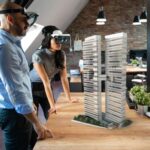
BIM Augmented Reality breaks through these barriers by providing a shared visual language. When stakeholders can physically walk a site while viewing the same digital overlays, there is far less room for misinterpretation. Every issue can be viewed in context, and decisions can be made faster with confidence.
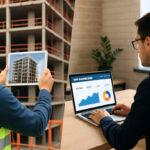
Platforms like BuildX reinforce this collaborative environment by enabling instant synchronization between field and office. If a field inspector identifies an issue, they can mark it directly through the AR interface, capture visual evidence, and update project records in real-time. Office designers or managers can respond without waiting for meetings, physical visits, or emailed reports.
This reduces the delays that come from “waiting on information” and ensures that decision-making is driven by current site conditions, not outdated assumptions. Teams also benefit from reduced administrative overhead—fewer spreadsheets, fewer back-and-forth clarifications, and fewer offline notes that need manual entry later.
This fast, transparent communication contributes significantly to on-site accuracy. Designs and real-world conditions stay connected, and everyone involved has access to the same actionable information without friction or bottlenecks.
4. Enhancing Quality Control with Real-Time Verification
Traditional quality checks often happen after installation has already been completed. If contractors discover an installation that isn’t up to standard, it usually requires backtracking—removing installed components, reworking structural elements, or adjusting surrounding assemblies. This not only costs resources but also damages workflow momentum.
BIM Augmented Reality introduces a modern approach to quality control: validation as the work is happening. With AR BIM, construction teams can compare the intended BIM model with the physical construction instantly. Workers can confirm spacing, dimensions, and positioning before committing to permanent fixtures.
This form of real-time verification transforms quality control from reactive to proactive. Site teams no longer need to rely on periodic inspections, manual measurements, or supervision that may not always be present when installation occurs. Instead, quality becomes integrated into the installation process itself.
Using BuildX, inspectors and supervisors can issue comments or corrective actions within the system, assigning tasks to specific team members. Progress updates can be tracked continuously, ensuring that every stage of the project meets design expectations. The result is a faster, more accurate construction flow where deviations are identified and handled early—before they create long-term complications.
This also leads to more consistent project outcomes. Whether the site team consists of seasoned professionals or newer workers, AR BIM provides the same high standard of accuracy and guidance, leveling performance and reducing dependency on individual experience levels.
5. Improving Documentation and As-Built Accuracy
Accurate documentation is essential in construction—not just during the build, but long after the project is complete. Facilities teams, building owners, and future contractors depend on precise records to plan maintenance, renovations, and lifecycle management. Yet, traditional as-built documentation often falls short. Notes may be handwritten, design modifications might not get fully updated, and details can be lost between teams.
BIM Augmented Reality changes the way as-built data is captured. Instead of relying on manual updates, AR BIM allows teams to record changes directly on digital models while standing at the installation site. Every modification can be visually validated, documented, and stored in the project system immediately.
With solutions such as BuildX, this information becomes part of a centralized digital environment shared across the organization. As-built drawings align more accurately with reality because they are created based on direct comparison—not memory, photographs, or separate site notes that need later interpretation.
This enhanced accuracy benefits every phase of the building lifecycle:
Maintenance teams can identify exact component locations
Future contractors can understand infrastructure without guesswork
Renovation decisions can be made based on trustworthy digital records
Additionally, legal compliance and warranty documentation become stronger. Having a precise digital record supported by AR validation reduces the chance of disputes or uncertainty about what exists within the structure. Over time, organizations using AR BIM develop a historical digital archive that supports better operations, higher transparency, and stronger lifecycle performance.
Conclusion
Construction is evolving rapidly, and organizations that embrace digital tools gain a clear advantage in execution, quality, and efficiency. BIM Augmented Reality provides a bridge between design and real-world construction by bringing digital models directly onto the job site. With enhanced visualization, early clash detection, improved communication, real-time quality control, and more accurate documentation, AR BIM fundamentally improves how teams build.
Platforms like BuildX make these capabilities accessible by combining AR, BIM data, and integrated project management into one seamless ecosystem. The result is a smarter approach to construction—one where site teams make better decisions, build with confidence, and deliver projects with precision.
As construction in Indonesia and beyond continues to digitalize, BIM Augmented Reality will play a crucial role in shaping the future of delivery, helping organizations reduce errors, avoid costly rework, and create built environments that align exactly with the original design vision.