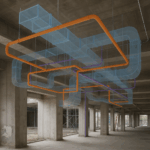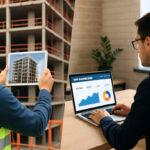
In recent years, construction projects have grown more complex, faster in pace, and more demanding in terms of accuracy. From early planning to final inspections, every stage requires precise alignment between digital project data and real-world site conditions. Mobile Augmented Reality (AR) tools have emerged as a practical, field-ready solution that addresses this challenge head-on. By blending 3D Building Information Modeling (BIM) data with live site visuals, AR helps teams identify errors early, evaluate progress more confidently, and accelerate decision-making where it matters most—on the jobsite.
Construction professionals in Indonesia and around the world are now adopting AR because the technology no longer requires advanced hardware or specialized operators. With mobile-based AR platforms such as BuildX—available at **https://buildxapp.net/**—field engineers, supervisors, and contractors can access digital models instantly from a smartphone or tablet. This accessibility is redefining how teams collaborate, inspect, communicate, and validate project execution.
Below is an in-depth look at why mobile AR tools are becoming indispensable for construction teams and how they transform day-to-day operations on site without disrupting existing workflows.
1. Enhancing On-Site Understanding with Real-Time Digital Overlays
One of the greatest challenges in construction is visualizing what the finished structure should look like before it is built. Traditional 2D drawings and even 3D models often require experience and interpretation, which can lead to misunderstandings and costly communication gaps. Mobile AR tools eliminate this barrier by placing BIM elements directly on top of the physical environment.
When field teams point their devices toward a section of the site, the AR system aligns building components—such as walls, columns, conduits, mechanical systems, or structural elements—with real-world coordinates. This allows contractors and engineers to instantly understand whether current work is aligned with the design intent. Instead of flipping between drawings or rechecking measurements manually, they can assess compliance visually and intuitively.
This capability is especially powerful during early phases such as foundation placement, rebar installation, and structural framing. Misalignments that previously took days to detect can now be seen in seconds. Teams gain the confidence to proceed faster because AR delivers clarity that static drawings cannot. As construction schedules become tighter, the ability to validate conditions instantly gives companies a significant competitive advantage.
2. Improving Error Detection Before They Become Expensive Rework
Rework is one of the most expensive inefficiencies in construction, whether it involves misaligned pipes, incorrectly positioned walls, inaccurate MEP installations, or structural deviations. Many of these issues arise because field teams do not always have immediate access to updated design models—or because discrepancies are not obvious until much later.
Mobile AR tools address this problem by making design verification a natural part of daily workflows. Field workers can compare “as-built” conditions with BIM data in real time, simply by pointing their device at the area they are evaluating. If a conduit is off by a few centimeters or a beam is installed at the wrong elevation, the AR overlay makes it immediately noticeable.
This early detection prevents small mistakes from turning into major disruptions. Supervisors also gain a clearer understanding of potential safety risks and scheduling conflicts arising from misaligned components. The result is fewer project delays and a smoother construction sequence overall. Using AR during routine site inspections can dramatically reduce the frequency of rework, which in turn improves cost control and client satisfaction across the project lifecycle.
3. Supporting Faster Decision-Making Through Visual Validation
Construction decisions often need to be made rapidly, especially when field conditions diverge from planned designs. Relying solely on drawings or verbal descriptions can slow down the process, create confusion, or lead to misinterpretations. Mobile AR tools streamline decision-making by providing real-time visual evidence, allowing stakeholders to understand issues instantly without lengthy explanations.
For example, when reviewing proposed changes to mechanical routing or structural placement, AR enables teams to visualize how the adjustment will appear on site. Instead of debating over measurements or theoretical diagrams, supervisors and managers can see a full overlay of the revised design integrated into the actual environment. This visual clarity helps teams evaluate feasibility, safety, cost implications, and workflow impacts in minutes rather than hours or days.
AR also serves as an effective communication tool for off-site stakeholders. Project managers, architects, and owners can view real-time AR captures shared by field teams, enabling faster approvals and reducing the number of unnecessary site visits. When decisions are based on accurate, consistent visual data, project momentum is maintained and misunderstandings are minimized.
4. Enhancing Team Collaboration Across Disciplines and Locations
Construction coordination involves multiple teams—from architects and engineers to safety officers, contractors, and inspectors. Each party brings different expertise, and miscommunication between them is a common cause of delays and disputes. Mobile AR tools help remove communication barriers by creating a shared, intuitive understanding of site conditions.
Teams can collaborate around the same AR visual data regardless of their physical location. For example, a supervisor on site can capture an AR overlay showing current progress and share it instantly with a remote architect or engineer. This provides a clear reference point for discussing solutions, approving changes, or identifying technical issues that may not be immediately obvious in photos or drawings.
AR also strengthens coordination during multi-disciplinary installations—particularly for MEP systems, which often require precise alignment to avoid clashes. The technology enables each discipline to visualize how their work fits with others before installation begins. As a result, the risk of conflicts decreases significantly. Improved communication supported by mobile AR tools leads to a smoother, more unified construction process.
5. Streamlining Inspections and As-Built Verification
Site inspections traditionally involve carrying physical drawings, taking manual measurements, marking discrepancies, and recording findings separately. This process is not only time-consuming but also prone to human error. Mobile AR tools simplify inspections by consolidating all necessary information into an interactive, on-screen experience.
Inspectors can verify structural and MEP components by comparing them directly with the BIM model in augmented reality. Deviations are spotted visually, and notes or observations can be recorded instantly within the app. This eliminates the need to cross-reference multiple documents or return to the office to complete reports.
When combined with mobile BIM viewers, AR becomes a comprehensive platform for verifying as-built conditions at every project milestone. Teams can be more thorough without slowing down progress, ensuring that quality control standards are consistently met. More accurate inspections translate into more durable buildings, safer environments, and lower long-term maintenance costs.
6. Increasing Productivity by Reducing Manual Checks and Repetitive Tasks
Construction teams often spend a significant portion of their day performing routine checks—verifying measurements, confirming design intent, comparing drawings, or interpreting technical maps. While essential, these tasks can consume valuable time and slow down work sequences. Mobile AR tools automate much of this manual effort by delivering instant, visual alignment between the model and the physical site.
By reducing the need for repeated measurements or drawing comparisons, AR enables teams to focus more on execution rather than administration. This improved productivity is especially beneficial during critical workflow phases such as structural installation, mechanical coordination, and finishing work.
Contractors gain more control over daily operations because they can quickly validate whether the team is working accurately and efficiently. In a competitive construction environment, the ability to increase output without compromising quality is a significant advantage. AR supports this goal by turning complex digital data into practical field-ready guidance.
7. Making Digital Construction Accessible Through Mobile Technology
In the past, digital construction tools were often expensive, technically demanding, or limited to specialized devices. Mobile AR tools change this paradigm by making advanced visualization technology accessible to field teams at all skill levels. Anyone with a smartphone or tablet can now interact with BIM data in real time.
This democratization of technology accelerates digital transformation in the industry. Contractors in Indonesia, for example, no longer need to invest in costly hardware or training before benefiting from AR-assisted inspections and model visualization. Platforms like BuildX provide a user-friendly, mobile-optimized solution tailored for real jobsite needs.
As AR becomes more mainstream, construction teams of all sizes—small contractors, mid-tier builders, and large engineering firms—can leverage its capabilities to improve accuracy, strengthen collaboration, and streamline operations. The shift toward mobile-enabled digital tools is creating a more connected, efficient, and data-driven industry.
Conclusion: AR Tools Are Becoming the New Standard for Construction Sites
Mobile AR tools are no longer experimental technologies. They have become practical, jobsite-ready solutions that empower construction teams to work smarter, faster, and more accurately. By integrating BIM data directly into the field environment, AR helps reduce errors, improve decision-making, enhance communication, and maintain high-quality standards throughout the project lifecycle.
As construction projects grow increasingly complex, the demand for efficient, real-time visualization tools will continue to rise. Mobile AR solutions—especially those integrated with BIM platforms like BuildX—are positioned to become the new standard for on-site operations in Indonesia and beyond. Firms that adopt these tools early will benefit from stronger project control, reduced rework costs, and improved client outcomes.
The future of construction is digital, mobile, and highly visual. AR represents a vital step toward that future, giving construction professionals the clarity, efficiency, and confidence they need to deliver exceptional projects every time.