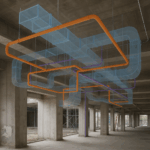
Modern building management demands accuracy, efficiency, and long-term operational sustainability. As facilities grow in complexity and expectations rise for consistent performance, traditional manual approaches are no longer able to meet the real-world challenges of maintenance planning, asset evaluation, and data-driven operational improvement. Facility Maintenance Building Information Modeling (BIM) has emerged as a transformative technology that supports continuous building lifecycle management by providing accurate and connected digital models. Through centralized data, owners and maintenance teams gain the ability to understand how systems perform, what needs improvement, and how tasks should be prioritized using real building insights. For organizations that want to move beyond fragmented data and slow decision-making, Facility Maintenance BIM provides a robust, innovative, and practical solution that supports optimal building performance. Many modern construction software platforms, such as BuildX, available at https://buildxapp.net/, offer tools that help contractors and owners integrate BIM into day-to-day site and maintenance operations.
What is Facility Maintenance BIM?
Facility Maintenance BIM refers to the application of Building Information Modeling technology to manage buildings after construction is complete. Unlike traditional facility management that often relies on paper records or separate digital files that are not connected, BIM provides a centralized digital representation that includes building components, mechanical systems, and critical maintenance data. This ensures that maintenance teams always have a precise picture of the building at any time, including its materials, dimensions, utility routes, and conditions. As a result, decisions are made faster, issues are identified earlier, and information remains consistent throughout the building’s life. Through a BIM-based approach, owners can store historical maintenance logs, documentation, and system performance data in one place, giving future personnel full visibility of the facility’s operational history. This single source of truth is what enables Facility Maintenance BIM to outperform traditional manual systems and support better planning across decades of asset use.
Enhancing Data Accuracy and Building Transparency
One of the strongest advantages of Facility Maintenance BIM is the improvement in data accuracy. Buildings are complex ecosystems involving electrical networks, HVAC lines, plumbing systems, structural components, and fixtures. Over the years, renovations or changes may occur, and without an accurate digital system, facility managers may lose track of what has changed or how systems evolve. BIM eliminates these issues by acting as a living model that updates alongside structural and operational modifications. Maintenance professionals can view exact dimensions, manufacturer information, installation dates, and maintenance schedules directly from the model, reducing time wasted searching for information or verifying assumptions. Furthermore, accurate digital models help reduce costly mistakes in maintenance work. Technicians can see what is behind walls or ceilings before making service decisions, helping them avoid accidental system damage. By keeping data current, BIM empowers teams to diagnose problems faster, understand infrastructure conditions better, and ensure that decision-making is always based on reliable and verified building information.
Streamlining Preventive and Predictive Maintenance
Effective facility management is not only about repairing systems when they fail; it is equally about preventing problems before they happen. Facility Maintenance BIM allows organizations to plan and schedule maintenance based on real equipment data, installation lifespans, and recorded performance. This creates an environment where preventive maintenance becomes standard rather than optional. Maintenance schedules can be automatically logged into the system, ensuring no crucial task is forgotten. This reduces downtime, prevents unexpected failures, and extends the usable life of assets. Predictive maintenance becomes possible when BIM data is connected to sensors, inspection logs, or performance data, enabling the system to alert maintenance teams when performance metrics fall outside expected ranges. As a result, teams can intervene before failures disrupt operations, and repair budgets become easier to forecast. This proactive approach reduces emergency repairs, optimizes resource allocation, and supports financial planning for long-term facility investments.
Improving Collaboration Between Stakeholders
Successful building management requires consistent coordination between owners, contractors, maintenance teams, engineers, and sometimes government or certification bodies. BIM helps facilitate this collaboration by ensuring that all parties access the same digital information, eliminating misunderstandings and data inconsistencies. With Facility Maintenance BIM, stakeholders can view building information remotely through cloud platforms, meaning inspections, review sessions, or planning discussions do not require all parties to be physically present on-site. Centralized data also ensures maintenance documentation remains consistent over years, even if personnel change. New engineers or facility managers can quickly learn how the building operates without spending weeks digging through old files. The use of BIM in platforms like https://buildxapp.net/ also allows multiple users to work in real time, ensuring updates are immediately visible to all participants. Collaboration becomes faster, more accurate, and less prone to communication failures that often lead to missed deadlines or budget overruns.
Supporting Faster and Smarter Repair Decisions
When building systems fail, facility teams need to make decisions quickly. Delays create operational risks and may negatively affect tenants, production facilities, or commercial operations. BIM provides visual insights that help maintenance professionals understand the context of the problem instantly. Instead of manually locating cable installations, plumbing paths, or structural supports, they can open the BIM model and identify relevant system components in seconds. This significantly reduces diagnostic time. Additionally, BIM models store past repair data, enabling teams to spot patterns and recognize recurring issues. If a particular pump, valve, or electrical panel has required repeated maintenance, it may be time for replacement rather than another repair. With digital records, decision-making becomes more strategic rather than reactive. Over time, this improves building reliability and helps ensure that limited maintenance resources are allocated where they provide the greatest operational benefit. Faster decision-making not only minimizes downtime but also reduces unnecessary labor and material expenses.
Enhancing Long-Term Asset Value and Sustainability
Buildings are long-term investments, and their value depends heavily on how well they are maintained over time. Facility Maintenance BIM helps preserve asset value by ensuring that buildings operate consistently, safely, and efficiently. By maintaining an accurate history of each system, owners gain visibility into how maintenance impacts performance and cost. BIM also supports energy management optimization by highlighting inefficiencies or system degradation earlier than manual inspection could reveal. For organizations with sustainability goals, BIM becomes an essential tool to improve resource usage, equipment efficiency, and environmental performance. Well-maintained systems consume less energy, require fewer unscheduled repairs, and often last longer than expected. This reduces the total cost of ownership and ensures better long-term financial outcomes for building owners. Additionally, BIM supports regulatory compliance by keeping all required documents, certifications, and inspection logs in a structured digital format, simplifying audits and compliance checks.
Digital Transformation and Future Facility Management
As more construction and facility management operations embrace digital transformation, BIM will increasingly become the backbone of modern building operations. The rise of smart construction applications, mobile inspection tools, and integrated workflow platforms allows BIM data to be accessed anywhere, by anyone authorized. Tools such as those offered by https://buildxapp.net/ enable on-site teams to view BIM data directly from mobile devices, capture inspection notes, upload issue photos, and update maintenance status in real time. This ensures that BIM remains dynamic and updated throughout the building’s operational life. Future systems may integrate BIM with IoT sensors, machine learning analytics, and AI-driven insights, providing automated recommendations and continuous monitoring. Organizations that invest in BIM today position themselves strongly for tomorrow’s fully digital facility ecosystem. The construction industry is evolving rapidly, and Facility Maintenance BIM is one of the most impactful innovations driving higher efficiency, better building performance, and sustainable operational excellence.