In today’s rapidly evolving construction industry, efficiency, accuracy, and real-time collaboration have become essential. Traditional project management methods often struggle to keep up with modern demands, resulting in costly errors, delayed timelines, and miscommunication between on-site and office teams. This is where BIM Indonesia emerges as a game-changer, integrating Building Information Modeling (BIM) with digital tools, augmented reality (AR), and smart construction applications to redefine how projects are planned, executed, and monitored.
By leveraging BIM technologies, construction professionals in Indonesia can visualize complex designs, track project progress, and ensure accurate execution directly on-site. Platforms like BuildX combine BIM with AR and ERP functionalities, providing a seamless interface for project managers, engineers, architects, and contractors. This integration reduces manual work, minimizes errors, and ultimately accelerates project delivery while keeping budgets under control.
Understanding BIM and Its Impact on Indonesian Construction
Building Information Modeling (BIM) is more than just a 3D modeling tool—it is a comprehensive process that connects all stakeholders in a construction project. In Indonesia, the adoption of BIM is rapidly growing, driven by the need for better coordination, improved accuracy, and efficient resource management.
BIM allows construction teams to create a digital representation of physical and functional characteristics of buildings. This digital twin facilitates precise planning, clash detection, and early problem-solving before construction begins. For project managers, BIM serves as a central hub for project data, ensuring that design changes, schedules, and costs are updated in real-time. The ability to visualize the project digitally enhances decision-making, reduces rework, and improves communication between architects, contractors, and clients.
With BuildX, BIM Indonesia is brought directly to the field using AR, allowing teams to validate the design on-site. This integration bridges the gap between planning and execution, ensuring projects are delivered efficiently and within scope. For large-scale developments in urban areas like Jakarta, Bali, and Surabaya, BIM adoption represents a significant step forward in professionalizing the construction sector.
Augmented Reality and Field Integration
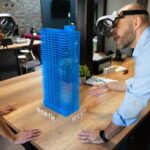
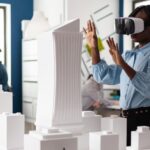
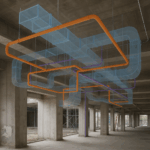
One of the most transformative innovations in Indonesian construction management is the integration of AR BIM into field operations. Traditional 2D drawings and even standard 3D models often fail to capture on-site realities. AR allows construction teams to overlay digital BIM models onto physical spaces, giving workers and managers a clear understanding of the design intent in real-world conditions.
Field engineers can walk through a site wearing AR-enabled devices to verify dimensions, identify clashes, and ensure construction accuracy. This proactive approach to quality control reduces costly errors and accelerates timelines. Additionally, AR facilitates remote inspections, allowing stakeholders who cannot be physically present to participate in decision-making.
Platforms like BuildX enable AR site inspections to synchronize with project management software, ensuring that any identified issues are logged, assigned, and resolved immediately. This real-time collaboration empowers teams to handle complex projects with confidence and efficiency, marking a paradigm shift in the Indonesian construction industry.
Digital Tools for Project Management
Effective project management is the backbone of successful construction. BIM Indonesia, when paired with digital tools such as ERP systems, mobile BIM viewers, and smart construction apps, provides unprecedented control over every aspect of a project.
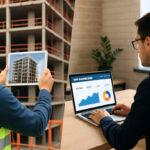
Project managers can track site progress, manage resources, and monitor budgets through a centralized platform. Material take-offs, bill of quantities, and scheduling are automated, reducing repetitive tasks and improving accuracy. Team members can access the latest project updates from any location, ensuring consistent communication and minimizing delays caused by outdated information.
Moreover, digital tools support collaboration across different departments—architecture, structure, MEP, procurement, and finance—allowing managers to oversee a project holistically. This interconnected ecosystem reduces redundancy and enables construction companies in Indonesia to achieve higher productivity without increasing staff size.
Enhancing Quality Control and As-Built Accuracy
Quality control is a critical challenge in the construction industry. Errors during construction can lead to significant financial losses and project delays. BIM Indonesia, combined with AR technology, enables proactive quality control and as-built inspection, ensuring that the completed structure aligns perfectly with design specifications.
With BuildX, teams can conduct real-time inspections, compare completed work against the digital model, and document deviations. This approach enhances accountability, improves construction standards, and provides a reliable record for facility maintenance and future renovations. The as-built digital model also facilitates better decision-making for future projects, creating a continuous improvement loop within construction companies.
Driving Efficiency Through Construction Digitalization
Digital transformation is reshaping the construction landscape in Indonesia. BIM Indonesia, augmented by smart tools and software platforms like BuildX, enables companies to handle more projects simultaneously, reduce downtime, and optimize resource allocation.
Automation in scheduling, reporting, and data collection frees teams from manual, repetitive tasks, allowing them to focus on value-added activities. Real-time analytics provide insights into project performance, risk areas, and potential cost overruns, enabling managers to act quickly and prevent issues before they escalate.
The digitalization of construction operations ensures that projects are delivered faster, with fewer errors and greater transparency. This competitive advantage is particularly valuable for Indonesian contractors seeking to expand into complex infrastructure and high-rise development projects.
Building a Future-Ready Construction Industry
The adoption of BIM and AR in Indonesia is not merely a technological upgrade—it represents a fundamental shift in how construction projects are managed. Companies that embrace these tools position themselves as leaders in quality, efficiency, and innovation.
Platforms like BuildX empower teams to collaborate effectively, reduce rework, and maintain precise control over finances, procurement, and schedules. By integrating BIM, AR, and digital management systems, Indonesian construction firms can meet growing demands for faster, more sustainable, and cost-effective project delivery.
As more organizations adopt BIM Indonesia, the construction industry is set to become increasingly interconnected, data-driven, and intelligent. From small residential projects to large-scale commercial developments, the combination of BIM, AR, and digital tools ensures that construction in Indonesia is not only modernized but future-ready.
Conclusion
BIM Indonesia is revolutionizing construction project management by bridging the gap between planning and execution, integrating augmented reality on-site, and leveraging digital tools for seamless collaboration. By adopting platforms like BuildX, construction professionals in Indonesia can improve efficiency, reduce errors, and deliver high-quality projects faster. The era of disconnected, error-prone construction processes is ending, replaced by a new standard of precision, accountability, and innovation.
For companies seeking to transform their construction workflow and gain a competitive edge, exploring BIM Indonesia and AR-enabled project management through BuildX is no longer optional—it’s essential.