Site inspections are one of the most critical activities in any construction project. They determine whether field work is following the approved design, whether the quality matches project standards, and whether potential issues can be identified before they develop into costly errors. Traditionally, construction inspections rely on printed drawings, field measurements, manual note-taking, and lengthy coordination between workers, supervisors, architects, and engineers. While this approach has worked for decades, it comes with limitations—lack of real-time information, outdated documentation, miscommunication, and slow decision-making.
Today, construction companies in Indonesia and around the world are transitioning to digital workflows to overcome these challenges, and one of the most powerful tools driving this transformation is the mobile BIM viewer. With a mobile BIM viewer, professionals can view Building Information Modeling (BIM) files directly on smartphones and tablets, eliminating dependency on bulky laptops, paper drawings, or external displays.
Platforms like BuildX, accessible at https://buildxapp.net/, make digital building models available in the field with the tap of a screen. Inspectors, contractors, and project managers gain instant access to 3D building models, updated plans, construction phases, and detailed component information wherever they are—on-site, in transit, or during coordination meetings.
This article explores how mobile BIM viewers transform construction site inspections, why they are a major step forward for project efficiency, and how their adoption is helping shape a more accurate, productive, and digitally connected construction landscape.
Replacing Paper-Based Plans with Real-Time Digital Access
For decades, contractors and inspectors relied on printed drawings to perform site inspections. These drawings were often large, difficult to carry, and easily outdated as revisions progressed throughout the project lifecycle. If a drawing changed shortly before an inspection, there was always a risk that on-site teams were working with the wrong version, leading to errors that might only be discovered much later. These manual methods often created inefficiencies, especially in fast-paced construction environments where project information changes frequently.
A mobile BIM viewer solves this issue by placing the latest design data directly into the inspector’s hands. Instead of carrying stacks of drawings, inspectors can open their mobile device and immediately access a synchronized 3D BIM model that reflects the most current version of the design. If an architect updates a wall layout, MEP routing, or structural detail, the change is instantly available to other stakeholders. This ensures consistency and clarity during inspections, minimizing the risk of outdated information affecting decision-making.
Mobile BIM viewers also allow inspectors to analyze layered drawings and different project disciplines—architecture, mechanical, electrical, and structural—without switching between physical documents. Users can isolate layers, zoom into specific areas, and better understand how design components interact. This digital flexibility improves focus, speeds up inspections, and reduces misunderstandings that could lead to rework.
In addition, having real-time access to project information empowers inspectors to validate installations immediately rather than waiting for office-based review. The result is a smoother inspection process, greater alignment between design and execution, and a reduction in the time wasted searching for documentation, revisiting unclear instructions, or performing repeat inspections caused by missing data.
Enhancing Accuracy Through Better Visualization
Accuracy during site inspections is crucial. A few centimeters of deviation in structural placement, conduit alignment, duct routing, or equipment positioning can have serious consequences when working with tightly integrated systems. Traditional inspection methods rely heavily on visual observation, tape measurements, and interpretation of printed drawings, leaving significant room for human error and subjective judgment.
Mobile BIM viewers dramatically improve accuracy by allowing inspectors to visualize the actual project in 3D directly on-site. Instead of imagining how a 2D drawing translates into real physical space, inspectors can see realistic representations of building components through the BIM model. This makes it easier to detect alignment problems and understand spatial relationships that may not be clear on paper.
For example, when inspecting electrical installations, an inspector can instantly pull up the BIM model, check the intended cable path, and compare it to the physical installation. If ducts or pipes are too close to structural elements or other systems, the issue becomes visible immediately—long before the site reaches a stage where corrections become expensive or disruptive.
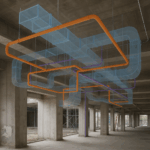
This visual clarity is especially helpful for complex multi-layer installations such as MEP systems. With a mobile BIM viewer, inspectors can isolate specific layers, understand potential clashes between systems, and verify whether contractors installed each component according to the intended design.
Additionally, visual inspection using mobile BIM viewers fosters better communication. Instead of explaining errors verbally or through sketches, inspectors can use the digital model to highlight the exact location and nature of the issue. This ensures that everyone involved understands the problem clearly, reducing the chance of misinterpretation and improving the accuracy of corrective actions.
By improving visualization, mobile BIM viewers eliminate guesswork, help teams understand design intentions more precisely, and ensure that installations align closely with project specifications.
Improving Collaboration and Communication Across Teams
Construction involves many stakeholders—owners, architects, engineers, contractors, subcontractors, suppliers, and supervisors—each with their own responsibilities. Ensuring these teams share the same understanding of plans and design intentions is essential for effective site inspections. Unfortunately, traditional communication often breaks down due to fragmented information, delayed updates, inconsistent documentation, or unclear instructions.
A mobile BIM viewer helps solve this by creating a centralized digital environment where everyone has access to the same project information in real time. Whether an inspector is on-site, an architect is at the office, or a project manager is traveling, all team members can open the same model and reference the same details.
This transparency reduces friction and eliminates the need to repeatedly share files or confirm which version is correct. During inspections, supervisors can instantly communicate findings through digital annotations, screenshots, or comments attached to specific components within the model. Instead of writing long notes or sending unclear messages, inspectors can pinpoint exactly where problems exist within the BIM environment.
Mobile BIM viewers also enable smoother coordination between teams. If an issue is found during inspection—such as a misaligned wall, an incorrectly placed panel, or a clash between ducting and structure—the inspector can document the problem and share it with responsible parties immediately. There is no need to wait for printouts, manual reports, or additional meetings. Issues are communicated faster, decisions are made sooner, and projects keep moving forward without unnecessary delays.
This connected workflow is especially valuable for project teams spread across multiple locations. In Indonesia, where many projects are built in different cities or remote regions, mobile BIM viewers help bridge distance and ensure that decision-making is not slowed by physical limitations. The result is a more collaborative, integrated, and productive inspection process that benefits all stakeholders.
Streamlining Documentation and Reporting
Site inspections usually generate large amounts of documentation. Inspectors record findings, take photos, note deviations, and compile reports that need to be shared with project managers, designers, and clients. These reports, when created manually, are time-consuming and often subject to personal formatting styles, which can lead to inconsistent quality or incomplete information.
Mobile BIM viewers streamline documentation by integrating reporting directly into the inspection process. Inspectors can mark issues digitally within the model, attach notes, capture photos, and link observations to specific components or locations. This ensures that every finding is accurate, contextual, and easy to understand. Digital reporting also reduces redundancy—inspectors no longer need to rewrite notes later, manually organize photos, or cross-reference drawings.
Furthermore, digital documentation improves traceability. Each issue is recorded with timestamps, user information, and precise spatial context, making it easy to track progress over time. If a project requires follow-up inspections, previous reports can be accessed instantly, allowing inspectors to review what was resolved and what still needs attention.
Clients and project managers also benefit. With centralized digital reports, they gain better visibility into project status without waiting for printed handovers or lengthy meetings. This level of transparency builds trust and strengthens professional accountability across the entire construction process.
By simplifying documentation, mobile BIM viewers allow inspectors to spend less time writing reports and more time focusing on actual inspection quality, helping projects move faster and with greater clarity.
Accelerating Decision-Making and Problem Resolution
Decision delays can significantly impact construction schedules. A minor uncertainty in installation detail can stall workers, waiting for clarification or approval. In large projects, these delays compound quickly, affecting timelines, budgets, and productivity. Traditional site inspections often require issues to be escalated manually, followed by meetings or revisions before teams can continue working, causing friction in the workflow.
With mobile BIM viewers, decisions can be made faster because all relevant information is available instantly. Inspectors can use their mobile devices to assess the situation, compare it with the BIM model, and provide immediate guidance without waiting for additional drawings or documents. If design clarification is required, project leaders can discuss the issue in real time even if they are not physically present.
Moreover, digital tools help detect issues earlier. Because the model is always available on-site, installers can validate their work continuously rather than waiting for scheduled inspections. Early detection reduces the chance of large-scale rework and prevents issues from escalating into costly structural or MEP conflicts.
Faster decision-making means fewer delays, tighter schedules, and more predictable project execution. For construction companies aiming to improve project efficiency and strengthen their competitive position, this ability to maintain workflow momentum is invaluable.
Conclusion
Mobile BIM viewers are transforming construction site inspections by replacing outdated manual processes with real-time digital access, powerful visualization, improved collaboration, and faster decision-making. By placing the BIM model directly in the hands of inspectors and field teams, mobile BIM solutions eliminate many of the challenges associated with printed drawings, fragmented communication, and delayed reporting.
Construction teams gain clearer understanding of design intentions, detect issues earlier, document findings more effectively, and coordinate decisions across locations with less effort. This leads to higher-quality installations, fewer errors, stronger transparency, and smoother project delivery.
With modern solutions like BuildX, available at https://buildxapp.net/, construction companies can adopt mobile BIM viewers without heavy investment in complex infrastructure. The technology is accessible, practical, and designed to support real-world conditions in the field.
As the construction industry continues to modernize, mobile BIM viewers will become a standard tool—not an optional one. Companies that embrace them today position themselves ahead of the competition and set a new benchmark for efficiency and excellence in project inspections.