Efficient project management in construction is not only about meeting deadlines but ensuring that every stage of the build—from planning to execution—moves with calculated precision. In today’s competitive market, becoming more efficient means leveraging new methodologies, enhancing communication, and using digital solutions designed for real-world challenges on job sites. Contractors, engineers, and project managers are now expected to maintain fast execution, maintain safety compliance, avoid costly rework, and provide transparent reporting. Achieving these standards consistently requires both strategic discipline and support from technology, such as Building Information Modeling (BIM), digital collaboration platforms, and on-site augmented reality apps that allow construction teams to align field conditions with design models. Platforms such as BuildX provide digital solutions that help streamline project control, on-site inspections, and team communication, allowing construction teams to minimize errors and maintain operational clarity throughout every phase of a project. More information about these solutions can be found at https://buildxapp.net/.
Why Effective Project Management in Construction Matters
The construction sector is often considered high-risk, capital intensive, and highly dependent on accurate planning. Effective project management construction practices reduce the chances of miscommunication, rework, schedule delays, and uncontrolled budget expansions. Construction projects typically involve multiple stakeholders, from subcontractors to owners, architects, consultants, and local authorities. Each of these parties needs to be working with synchronized data and shared objectives. If the flow of information becomes slow, unclear, or inconsistent, the entire timeline can suffer. This is why modern construction management emphasizes digital collaboration and structured workflows rather than conventional document-based processes, which often create confusion on-site.
In addition, the construction environment itself is unpredictable. Weather, material availability, workforce fluctuations, and unforeseen field conditions can all contribute to project disruption. Strong project management allows for flexibility within structure, enabling project teams to reallocate tasks, evaluate alternative workflows, or update models without losing control of the overall schedule. Having up-to-date information accessible on mobile devices, tablets, or site kiosks also keeps workers informed in real time, reducing the need for frequent back-and-forth with managers. Construction professionals who successfully implement modern management practices are more likely to complete projects on time and within acceptable cost limits, which improves profitability and client satisfaction. As pressures continue to increase across the industry, the ability to deliver consistent results is a major competitive advantage.
Building a Clear and Practical Construction Plan
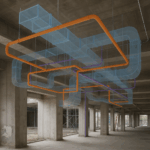
A construction project cannot begin without a strong plan that outlines scope, timeline, responsibilities, and expected outcomes. However, planning is not only about documentation. It must translate into actions that workers in the field can realistically execute. One common challenge is that planning is often completed at the office, far from site conditions. When the project begins, discrepancies appear between digital drawings and real-world measurements, material positioning, or existing structures. Digital planning tools and BIM models help bridge this gap by enabling precise 3D visualization. Teams can assess conflicts, evaluate spatial alignment, and run simulations before the build starts, which minimizes surprises once work begins. The use of AR viewers enhances this even further by allowing teams to overlay 3D models directly onto the job site, creating instantaneous context and making it easier for supervisors to verify that ongoing work matches the intended design.
The planning stage should also break down tasks into smaller target outputs and milestones. This allows managers to monitor progress continuously rather than wait until the end of a phase. Stakeholders should review risk factors, resource allocation, timelines, and the order in which materials must be delivered. Clear planning also includes drafting contingency plans for likely disruptions. Technology platforms support this process by providing shared dashboards that highlight progress, open issues, assigned tasks, and next steps. When everyone understands what they are responsible for and how it fits within the timeline, site operations become more predictable. The goal is not to eliminate challenges entirely but to be prepared for them so the project can continue without major setbacks.
Enhancing Communication Through Digital Collaboration
Communication is one of the most decisive factors in project success. Traditional construction workflows rely heavily on meetings, printed drawings, verbal instructions, and messaging groups that are often unstructured. This approach may work on a small site with few people, but it quickly becomes ineffective as soon as more subcontractors, supervisors, or departments are involved. When communication becomes fragmented, critical updates may not reach workers in time, leading to confusion, incorrect installations, or delays. Digital collaboration tools are now considered essential to modern project management construction systems because they provide a structured, traceable, and real-time flow of information.
Platforms such as BuildX provide integrated communication channels where site observations, design updates, issues, and approvals can be managed within one environment. This consolidates the entire project history into a single source of truth rather than spreading updates across multiple unlinked platforms. Workers on-site can also report issues directly from the field, attaching photos, notes, and model references that help managers understand the context without needing multiple back-and-forth conversations. This change in workflow accelerates decision-making and ensures accountability because every update, comment, and approval is recorded. Additionally, digital collaboration reduces the need for frequent physical meetings, allowing managers to spend more time monitoring real progress instead of administering communication. Consistent use of digital communication tools ensures that everyone is working from the latest information and minimizes the chances of rework caused by outdated drawings or misunderstood instructions.
Using Technology for Real-Time On-Site Inspections
On-site inspections are a normal part of construction management, but they traditionally rely on manual observation, checklists on paper, and later transcription into digital systems. This manual approach is slow and increases the chances of inaccurate recording. More importantly, if errors are discovered late, they may require expensive rework or extension of the construction timeline. The use of digital inspection tools and AR mobile BIM viewers changes the workflow completely. Inspectors can walk the site with a tablet and compare what they see physically with 3D models from the BIM system. This makes deviations immediately apparent, even if they are small. Instead of waiting for the end of the day to report findings, inspectors can create an issue ticket instantly, attach model references, and assign resolution responsibility.
This approach also standardizes the inspection process. Instead of relying on individual inspector experience, digital platforms offer predefined checklists, automated compliance reminders, and visual overlays of expected structural positions. For example, if installers are placing electrical conduits, they can view the BIM layout in AR and verify positioning within millimeters. This level of precision helps reduce future conflicts such as pipes overlapping with HVAC systems or electrical components installed outside their specified zones. Over time, this improves overall construction accuracy, minimizes disputes, and increases trust between project stakeholders. When inspections become digital, progress is tracked continuously, and project managers gain immediate visibility into site status rather than waiting for delayed reports.
Managing Materials and Labor More Efficiently
Material handling and labor planning are among the most influential elements in project management construction. Materials arriving too early can cause storage problems, while delays can stall entire workflow sequences. Labor planning also requires awareness of how many workers are needed at each phase and what skill sets are required. Technology platforms centralize this data and enable managers to plan based on actual progress rather than assumptions. By reviewing real-time updates from the field, managers can foresee whether an upcoming task might require more resources, additional training, or acceleration in material procurement. If a task is falling behind schedule, early detection allows management to adjust manpower, reschedule dependent tasks, or speed up deliveries from suppliers.
In many cases, digital construction systems also prevent material losses. Tracking systems ensure that materials delivered to the site are documented, stored properly, and used without waste. Labor performance can be assessed not only based on hours worked but on productivity relative to planned outputs. When labor and material usage are optimized, projects become more profitable and predictable, which is essential for maintaining competitiveness. Furthermore, having real-time data also helps during post-project evaluation. Managers can identify which phases showed delays, which sub-teams consistently required additional support, and where future efficiencies can be introduced. A digital-first approach ensures that lessons learned are not forgotten but recorded and used to improve subsequent projects.
Continuous Monitoring and Reporting for Smarter Decision Making
Continuous monitoring is the discipline that turns good project management into great project management. It ensures that the strategy does not remain static once the project begins. Construction sites live in constant motion, and even a small misalignment—such as a slight shift in measurement or a missing safety clearance—can create downstream complications if not corrected immediately. Continuous monitoring provides a reliable loop of observation, analysis, and response that keeps site operations under control. Project managers gain clarity over performance and can make decisions supported by objective data rather than assumptions or incomplete updates.
Digital reporting systems enhance this by automatically compiling progress charts, open issue lists, upcoming tasks, and work performance metrics. Instead of spending hours assembling reports manually, site supervisors can generate detailed summaries with a single command. This frees up managerial time to focus on strategic supervision and coordination. Stakeholders also benefit because they receive consistent, transparent updates. Whether they are investors, consultants, or clients, reports based on real data increase confidence in the construction process. When issues are detected early and resolved quickly, projects stay aligned with intended schedules and budgets. By integrating digital systems into continuous monitoring, construction organizations build a workflow that is faster, more accountable, and more resistant to disruption.
Leveraging Digital Construction Tools for Modern Site Operations
The demands of modern construction are no longer compatible with outdated manual systems. Digital tools are essential for real-time field performance, collaborative communication, and precise site execution. Solutions such as BuildX support this transformation by offering features that connect BIM models to site inspectors, allow AR visualization for real-world alignment, and consolidate communication into one platform. These capabilities allow construction companies to eliminate avoidable rework, accelerate inspections, and maintain full control over project progress. By using platforms designed for modern site needs, managers can ensure that every stakeholder receives accurate information immediately.
Modern digital workflows also help construction companies achieve consistency across multiple projects. Instead of building new reporting systems, document structures, or inspection templates from scratch, organizations can standardize their project management methods and reuse them with adjustments. This creates a scalable operational system suitable for both small and large projects. Furthermore, digital systems make teams less dependent on single individuals. If a supervisor is unavailable, another manager can quickly understand the project status by reviewing the platform’s history and data. This reduces operational vulnerability and increases reliability of execution.
Conclusion
Efficient project management construction practices are essential for reducing errors, improving communication, controlling costs, and maintaining on-time delivery. The shift toward digital workflows is no longer optional—it is now a practical requirement for remaining competitive in an industry where client expectations, regulatory standards, and technical complexities continue to rise. By relying on modern construction tools, BIM-based workflows, and digital communication systems, construction companies can enhance transparency, improve decision-making, and deliver consistent project outcomes. The future of construction belongs to teams that embrace digital transformation and use platforms such as https://buildxapp.net/ to strengthen their site operations and achieve superior project performance.