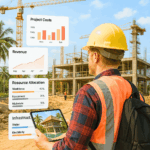
Construction projects are complex environments where dozens of activities take place simultaneously. Project managers are responsible for ensuring that every task is completed correctly, documented, coordinated, and aligned with the overall schedule. Traditionally, site progress tracking relied on manual inspections, paperwork, spreadsheets, and periodic reporting, which often resulted in delays, limited visibility, and incomplete data. In a fast-moving project, information that arrives too late can become useless. This is why modern construction companies are turning toward digital solutions such as Building Information Modeling (BIM) and field management applications. These tools make real-time tracking, monitoring, and validation of work not only possible but efficient. One such platform, BuildX, provides an integrated ecosystem designed to help construction teams visualize progress, record site activities instantly, and maintain operational clarity from start to finish. More information can be found at https://buildxapp.net/.
Why Site Progress Tracking Matters in Modern Construction
Effective site progress tracking is a core component of reliable construction management. Every construction project operates under tight constraints involving budgets, deadlines, labor availability, and regulatory requirements. When tracking is poor or inconsistent, delays compound quickly. For example, if the installation of a structural component falls behind schedule but the data is not reported until days later, follow-up teams may arrive on site with nothing to do, wasting labor and disrupting future work sequences. Accurate tracking prevents these issues by giving stakeholders exact information about what has been completed, what remains, and what adjustments are required in real time. It also helps identify risks early, enabling managers to enforce corrective actions before small problems become costly obstacles.
In addition, site tracking plays a significant role in accountability. Construction projects involve multiple subcontractors, consultants, and stakeholders, each with defined responsibilities. Without a structured tracking system, responsibility can become blurred, and misunderstandings arise about which tasks have been completed and which have not. Digital tracking creates an auditable timeline that shows who performed the work, when it was completed, and how it aligns with original plans or BIM models. This reduces the potential for disputes and provides a clear foundation for reference throughout the project lifecycle. Beyond internal benefits, accurate tracking also helps maintain transparency with clients, investors, and project owners, who frequently require detailed progress updates. By shifting from manual reporting to real-time digital systems, construction firms set themselves up for more predictable, repeatable project outcomes.
The Advantages of Digital BIM-Based Tracking
The move from paper-based tracking to BIM-supported digital systems reshapes how information flows across a project. In manual workflows, site updates depend on field notes, verbal communication, and later transcription into reporting documents. This approach introduces delays and risks of human error. By contrast, BIM-enabled platforms allow field teams to integrate site observations directly with project models. As a result, managers not only see reports but also visualize the status of a building in its actual 3D context. If structural elements, MEP components, or interior layouts are behind schedule, this becomes immediately visible. BIM tracking improves decision-making because data is not abstract. It is realistic and anchored to real-world conditions.
One of the most significant advantages of BIM-based tracking is the ability to capture progress at the exact point of work. Instead of writing inspection notes on paper, supervisors can use tablets or mobile phones to photograph specific areas, annotate models, record percentages of completion, or log issues directly into the system. This content syncs instantly with the wider project database. Managers back in the office or elsewhere can view these updates without waiting for weekly or monthly reporting cycles. This speed helps construction projects stay agile, enabling teams to reassign resources, update schedules, or coordinate follow-up work based on live data rather than outdated assumptions. Over time, digital tracking also creates a historical record that can be referenced for future planning, improving organizational knowledge and execution capacity.
BuildX: A Solution Built for Field Productivity
BuildX was developed to solve one of the biggest challenges in construction: bridging the gap between office-based planning and real-world site execution. Many digital construction platforms focus on planning, while BuildX emphasizes the critical stage where work is performed: the field. Through the BuildX mobile platform, workers, supervisors, and site managers can record progress instantly and link observations to BIM models. This real-time tracking ensures that everyone—from project engineers and subcontractors to executives and clients—shares the same unified understanding of site status. This transparency eliminates misalignment and prevents teams from working with outdated plans or incomplete information.
The platform also supports intuitive navigation, allowing users to switch between plans, 3D models, issue logs, and progress histories quickly. A task that might once have required multiple site visits, note consolidation, and follow-up meetings can now be completed with a single digital workflow. Workers can record status with photographs, videos, or text notes, and managers can review the information immediately. BuildX also offers structured issue logging. If a component is installed incorrectly, supervisors can assign tasks to the responsible team and monitor resolution in real time. This structured flow dramatically reduces the time lost to unclear instructions or fragmented communication. As a result, site inspections become far more productive, less manual, and less prone to oversight.
How Digital Progress Tracking Improves Project Scheduling
Scheduling is one of the most sensitive aspects of construction management, and its success depends heavily on accurate tracking. When managers only receive progress data periodically, they often work with assumptions instead of facts. In contrast, real-time tracking provided by tools such as BuildX allows schedules to be adjusted dynamically. If a carpentry task is completed earlier than expected, follow-up trades can be notified to mobilize sooner. If a structural assembly is delayed, material deliveries, manpower assignments, or equipment rentals can be rescheduled, preventing idle time and unnecessary expense. The ability to make these decisions quickly is one of the strongest drivers of schedule performance.
Progress tracking also supports better forecasting. Over time, managers can identify patterns in productivity. For example, they can observe that a particular trade consistently completes tasks faster than planned or that another encounters recurring bottlenecks. This information is invaluable during future planning, as it enables project engineers to estimate more accurately based on real project history. Instead of generic timelines, teams use performance-driven metrics rooted in actual conditions. Additionally, digital scheduling systems make it easier to communicate changes to all stakeholders simultaneously. Rather than relying on a chain of verbal messages, updates become instantly visible across the platform, reducing the risk of confusion or misalignment.
Reducing Rework with Accurate Field Data
One of the costliest issues in construction is rework—an outcome that occurs when mistakes are not detected in time. Rework affects not only budgets but schedules, workforce allocation, material waste, and downstream project stages. Digital progress tracking drastically reduces the risk of rework because problems are documented as soon as they are observed. For example, a site supervisor using BuildX could compare physical installations with BIM model positions through the platform and identify alignment issues immediately. Instead of waiting until the next phase reveals a problem, the responsible team can correct the work while labor and equipment are still on site.
Additionally, digital systems maintain photographic and data-based records of progress. If a dispute arises later—such as whether a component was installed according to specifications—teams can refer to the documented timeline instead of relying on memory or personal interpretation. The clarity offered by data supports constructive problem solving and reduces friction during project execution. Over time, as more projects use digital tracking, organizations accumulate valuable insight about common sources of error. Managers can analyze these patterns and update site standards or training programs to prevent recurring issues, leading to year-over-year improvement in performance and quality.
Improving Communication Across the Project Team
Construction sites involve multiple layers of communication. Workers report to supervisors, supervisors report to project managers, managers report to company executives, and the entire organization may need to update clients or external stakeholders. When this communication chain relies on verbal reports, phone calls, or scattered messages, the likelihood of misalignment increases significantly. Digital platforms such as BuildX restructure this communication by consolidating updates into a single shared ecosystem. Instead of waiting for status reports, stakeholders can log into the platform and check progress independently. Issue threads, task updates, and inspection findings remain accessible to everyone who needs them, creating transparency and clarity.
This improved communication also boosts accountability. Tasks are assigned to specific individuals or teams in the system, and progress is monitored digitally. If a deadline is missed, managers can quickly identify the cause and engage the right people to resolve the issue. Likewise, workers in the field benefit from instant clarification. If they encounter uncertainty, they can upload a question or observation, and project managers can respond without requiring a physical site visit. These workflows significantly reduce downtime and empower teams to work with confidence, knowing they always have access to correct information.
BuildX and the Future of Digital Construction Management
Construction technology continues to evolve, and solutions like BuildX represent the shift toward data-driven project management. The industry is moving beyond the era where digital tools were optional. In competitive construction markets, digital tracking is a practical requirement for delivering quality work consistently, efficiently, and profitably. As digital adoption increases, firms gain long-term advantages that strengthen their position in the market. They deliver faster, reduce waste, respond to issues quicker, and maintain clearer communication with clients and stakeholders. The cumulative impact of these improvements often determines whether a construction business grows, or remains stagnant.
BuildX offers features that directly support modern site execution: real-time progress tracking, issue reporting, BIM integration, visual task validation, and mobile-first workflows designed for the job site. By using platforms like this, construction organizations create an environment where the field and office operate as a single unit rather than separate silos. This synchronization allows managers to make decisions based on fact, not assumptions. It improves worker productivity, reduces conflicts, strengthens project visibility, and ultimately increases project delivery performance. When data becomes central to site operations, the entire construction lifecycle becomes more predictable, streamlined, and scalable.
Conclusion
Site progress tracking is one of the most important elements of construction project management. When data is delayed, incomplete, or fragmented, scheduling becomes unreliable, communication suffers, and rework becomes more likely. Digital BIM-enabled tools such as BuildX eliminate these challenges by providing real-time visibility into field conditions, structured reporting, issue logging, accurate documentation, and seamless communication across stakeholders. With construction demands becoming more complex and timelines becoming tighter, organizations that adopt digital progress tracking position themselves for greater efficiency, stronger project performance, and long-term competitiveness. To explore how BuildX supports digital site management and BIM-based tracking, visit https://buildxapp.net/.