
Every construction project aims to deliver on time, within budget, and according to design specifications. In reality, however, construction sites often face challenges that disrupt these goals—miscommunication, misinterpretation of drawings, missing details, and late discovery of mistakes. These issues frequently lead to rework, which can consume a significant portion of project cost and time. In many construction projects, rework becomes one of the biggest contributors to cost overruns and scheduling delays. This is especially true in large-scale developments where complex building systems must be installed with precision.
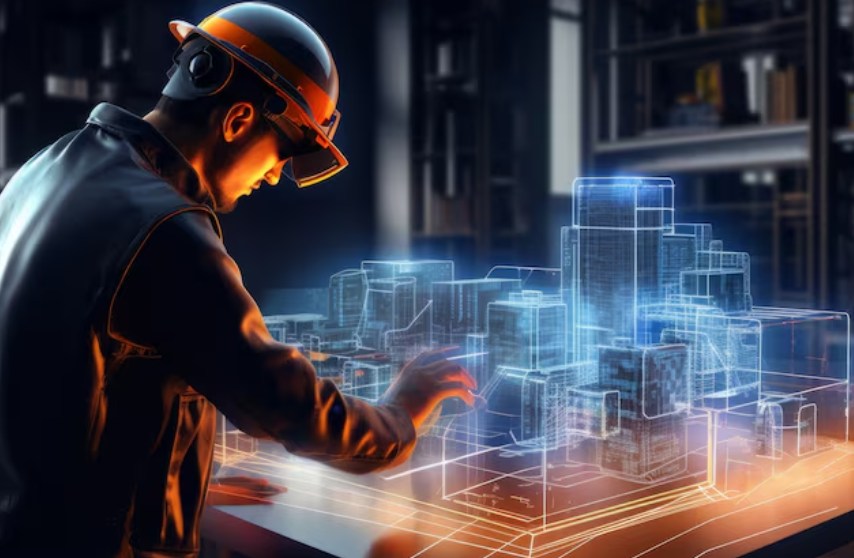
To address this ongoing problem, the construction industry is turning to technological innovation. One of the most promising advancements is AR site inspection, a process that uses augmented reality to overlay digital Building Information Modeling (BIM) models directly onto the physical jobsite. Instead of relying purely on printed plans or traditional inspection methods, inspectors and contractors can view the design model on mobile devices or AR headsets and compare it to what is being built in real time.
AR site inspection is changing how field teams validate accuracy, detect errors, and communicate issues. Platforms like BuildX, accessible at https://buildxapp.net/, make it possible to use AR in practical on-site workflows—enabling contractors to find deviations earlier, visualize design intent more clearly, and prevent costly rework before it happens.
This article explains how AR site inspection works, why it is a major advancement in construction quality control, and how it helps reduce errors and rework across various project stages.
Traditional Construction Inspections and Their Limitations
For decades, site inspections relied on manual workflows and physical documents. Inspectors typically carried printed plans, measurement tools, notebooks, and cameras while walking the site to verify progress and confirm whether installations aligned with the approved drawings. While this approach has been standard practice, it contains several inherent limitations that make accuracy difficult to maintain—especially in large or complex buildings.
One major challenge is that printed drawings often do not reflect the latest revisions. In fast-moving projects, designs change rapidly. If the team on-site is unknowingly working from outdated documents, installations can be completed incorrectly. By the time discrepancies are detected, materials may already be installed, requiring manual removal and rework. In addition, interpreting 2D drawings in three-dimensional space is difficult. Even experienced inspectors may need extra time to imagine how systems like piping, ducting, or structural components translate from paper to real-world layout.
Another challenge is human communication. Inspection results are often handwritten, later documented in reports, and then shared with supervisors or design teams. Each step introduces opportunities for misinterpretation or data loss. Because many decisions require input from multiple stakeholders, information delays can slow down problem resolution.
Furthermore, coordination between disciplines becomes complicated. Architectural, mechanical, electrical, and structural systems must align perfectly, yet in traditional inspection workflows, inspectors often need to cross-reference multiple drawings or layouts, switching between sheets to confirm that installations are correct. This manual process takes time and increases the chance of oversight.
These limitations contribute directly to rework, inefficient communication, and delayed decision-making. AR site inspection offers a solution by allowing inspectors to visualize design information in real space, compare it directly with built conditions, and record findings digitally without relying on manual tools.
How AR Site Inspection Improves Accuracy Through Real-Time Comparison
One of the biggest advantages of AR site inspection is the ability to place the digital BIM model directly over the physical installation. Instead of trying to interpret drawings or imagine how a component should look, inspectors can simply walk around the site with a mobile device or AR headset and compare what has been built with the intended design. This simple shift in workflow drastically improves accuracy.
When a worker installs wall framing, piping, conduits, ceiling grids, or structural elements, the inspector can quickly confirm if positions, angles, and measurements match the digital model. If a duct is a few centimeters too low or an opening is misplaced, the discrepancy becomes visible immediately. Because deviations are detected early—sometimes within minutes of installation—corrections require far less time and effort than if the mistake had been discovered weeks later.
This real-time comparison is especially valuable for projects involving complex building systems. In modern construction, multiple systems must be coordinated within tight tolerances. An air-handling unit, for example, must fit within ceiling space alongside electrical conduits, lighting systems, and fire protection piping. Even a small misalignment could lead to cascading conflicts, requiring adjustments across several disciplines. AR site inspection helps detect these issues before components clash or installation progresses too far.
Beyond geometry, inspectors can also view metadata embedded in BIM objects. Material specifications, model numbers, installation notes, or design constraints can be accessed instantly. This means inspectors no longer need to consult physical binders, cross-reference documents, or rely on memory. Every detail is accessible at the moment of inspection.
By reducing uncertainty and giving inspectors a clearer, real-world representation of the design, AR strengthens quality control and makes it easier to build exactly according to specification.
Enhancing Communication and Collaboration Among Stakeholders
In traditional construction projects, communication between field teams and office-based personnel often happens through written reports, emails, or scheduled coordination meetings. While this structure can be effective, it is slow and vulnerable to misinterpretation. If inspectors find a problem, they might take photos, add written notes, and send the information later to architects, engineers, or contractors for review. The time lag between detection, explanation, and approval can cause delays that impact productivity and workflow.
AR site inspection transforms this communication model by allowing issues to be documented digitally at the exact location where they occur. When a deviation is found, inspectors can tag the point in a 3D environment, attach screenshots, add comments, and assign the issue to the responsible party. The information is synced immediately, allowing remote team members to see the problem in context without needing a site visit. This level of digital clarity shortens the decision cycle and improves collaboration.
Another benefit is that AR reduces misunderstandings. In traditional workflows, a written note like “pipe too close to beam” might be interpreted differently by different stakeholders. In AR, the exact location and visual context are shared instantly. The responsible team can view the alignment in 3D, understand the problem at a glance, and propose a solution with confidence.
This immediate visual communication supports a culture of collaboration rather than blame. Instead of debating what went wrong or whose perspective is correct, everyone focuses on finding the best solution based on reliable, unified information. For projects where multiple stakeholders operate across different offices or cities, AR site inspection becomes an essential tool for maintaining alignment and ensuring stakeholders remain synchronized throughout the project.
Reducing Rework and Preventing Costly Construction Mistakes
Rework is one of the biggest sources of waste in construction. Every time something is installed incorrectly, resources are spent removing the mistake, purchasing new materials, and reinstalling the correct elements. Labor hours increase, schedules slip, and costs escalate. AR site inspection helps reduce rework by detecting issues earlier, before they turn into expensive problems.
Because AR makes it easier to compare the BIM model to real-world installations in real time, many issues can be caught on the same day they occur. This is a major improvement over traditional methods, where deviations may only be discovered during a later inspection, after other components have already been installed. The earlier issues are detected, the cheaper and easier they are to correct.
For example, if an electrical conduit is slightly misaligned, the inspector using AR can see immediately that the modeled position does not match the physical installation. The worker can be notified quickly, allowing the correction to be made before surrounding systems like ductwork or drywall are installed. This prevents compound errors from occurring.
Additionally, AR site inspection encourages continuous verification rather than occasional checks. Workers themselves can use AR tools before calling for final inspection, ensuring their work meets design standards before moving forward. This helps foster a proactive culture where quality assurance happens on the spot, not only after construction is complete.
Reducing rework has multiple benefits. Projects move faster because fewer mistakes must be undone. Budgets stay under control because materials are used efficiently. Teams experience less stress because problems are resolved before they escalate. Most importantly, the overall quality of the building improves, creating a better final result for owners and occupants.
Improving Documentation and Strengthening Accountability
Proper documentation is essential for construction project success. Inspection reports, compliance records, and progress logs must be complete and accurate, especially when multiple teams are involved. Traditional reporting, however, can be time-consuming and inconsistent. Inspectors often take notes in the field and type them into reports later, which increases the chance of missing details or miscommunication.
AR site inspection simplifies documentation by capturing findings digitally as they occur. Inspectors can record issues directly within the AR environment, attach visual evidence, categorize observations, and save them automatically. This eliminates manual transcription and ensures that reports are complete, consistent, and tied to the exact location of the issue.
Digital documentation also improves transparency. Every recorded issue includes timestamps, responsible parties, and the documented resolution history. Project managers and owners gain clearer visibility into site progress, compliance, and quality status. This level of transparency creates stronger accountability across all disciplines and reduces disputes among stakeholders.
Furthermore, digital inspection records become valuable references for future projects. Construction companies can analyze historical inspection data to identify recurring issues, training gaps, or process improvements. Over time, this contributes to smarter project planning and stronger organizational learning.
With platforms like BuildX at https://buildxapp.net/, documentation becomes part of the workflow rather than a separate administrative task. Inspectors spend less time writing reports and more time focusing on what matters—ensuring construction quality and preventing costly rework.
Conclusion
AR site inspection is transforming construction by eliminating traditional barriers to accurate, efficient, and coordinated project delivery. Instead of relying on outdated drawings, slow communication processes, and manual inspections, construction teams can now use augmented reality to compare the BIM model directly with real-world installations. This real-time visibility allows issues to be detected earlier, corrected faster, and documented more reliably.
By improving accuracy, strengthening communication, and reducing delays, AR site inspection plays a crucial role in minimizing rework—one of the largest sources of waste in construction. Companies that adopt AR inspection benefit from lower project costs, shorter schedules, greater transparency, and higher construction quality.
Modern platforms such as BuildX, available at https://buildxapp.net/, make AR inspection practical and accessible, enabling project teams to integrate digital workflows into their daily operations without major technological disruption.
As the construction industry continues to evolve, AR site inspection will move from being a competitive advantage to an industry standard. Organizations that embrace it now will position themselves ahead of the digital transformation curve and set a higher benchmark for precision, performance, and value in every project they deliver.