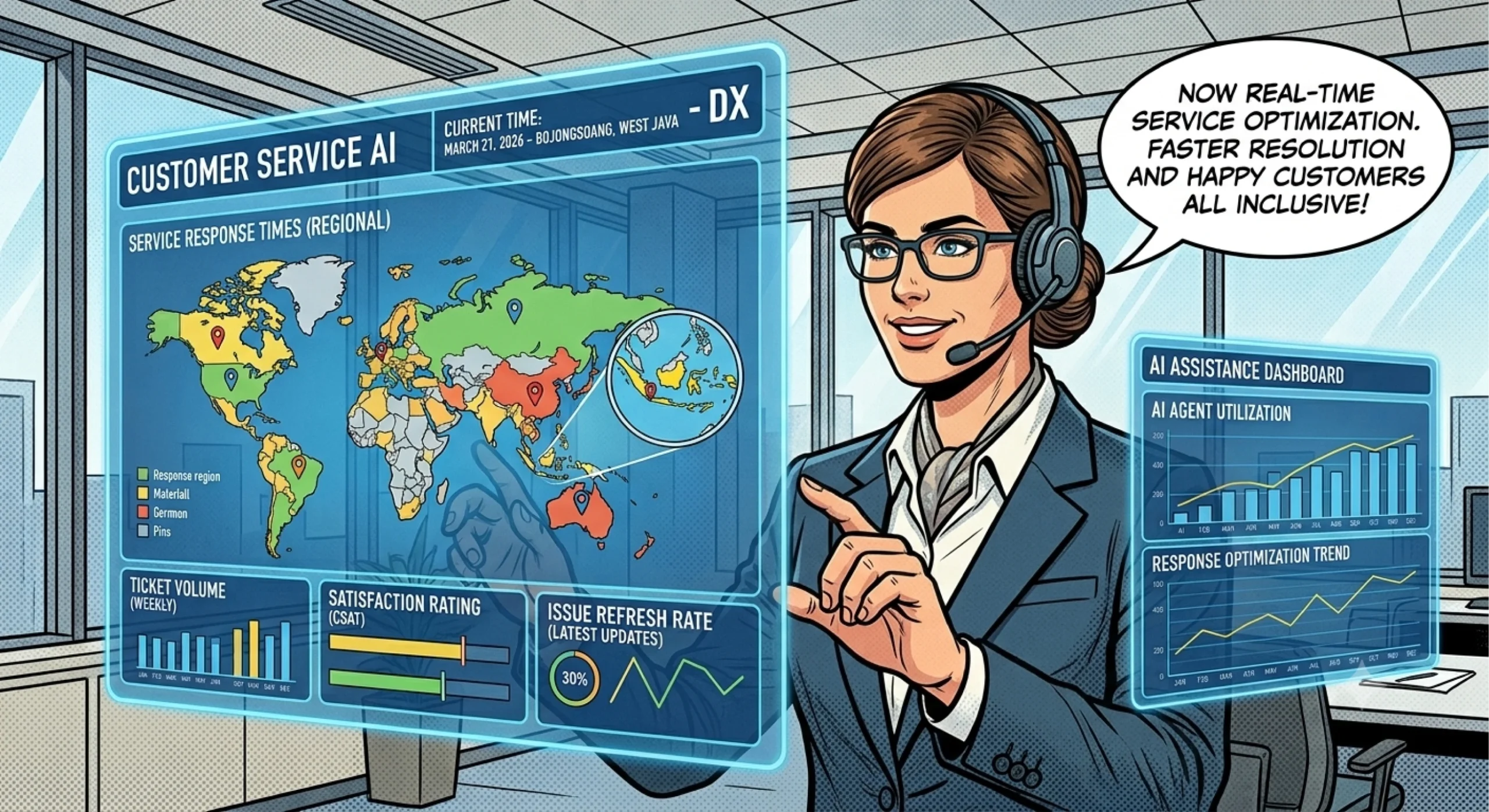

Modern businesses are expected to move faster than ever. Customers expect immediate responses, managers need real-time insights, and employees often juggle multiple responsibilities across departments. Yet many organizations still rely on manual workflows, disconnected software, and repetitive administrative tasks that slow productivity and increase the risk of human error.
This growing operational complexity has led many companies to explore AI Agents for Business as a practical solution. Rather than functioning as simple chatbots or automation tools, AI agents can perform specialized business tasks, analyze information, support decision-making, and collaborate with employees across different functions.
Whether you’re leading a construction company, consulting firm, property developer, startup, or agency, understanding how AI agents improve daily operations can help your organization become more efficient, responsive, and prepared for future growth.
What Are AI Agents for Business?
AI Agents for Business are intelligent software systems designed to perform specific business functions with minimal human intervention. Unlike traditional automation software that follows predefined rules, AI agents can interpret context, process large amounts of information, and adapt their responses based on changing business conditions.
Think of them as digital specialists assigned to particular roles within your organization. Instead of replacing employees, they handle repetitive and data-intensive activities, allowing people to focus on strategic planning, creativity, customer relationships, and problem-solving.
Common responsibilities include:
- Managing business workflows
- Monitoring operational performance
- Assisting customer support
- Tracking procurement activities
- Supporting financial operations
- Coordinating project tasks
- Analyzing sales opportunities
- Generating reports and recommendations
Organizations new to intelligent digital workers may benefit from first understanding AI Employees and how specialized digital workers contribute to modern business operations.
Why Businesses Are Adopting AI Agents
Business operations have become increasingly data-driven. Every day, organizations generate information from customers, suppliers, projects, finance, HR, and sales. Processing all this information manually is both time-consuming and inefficient.
AI agents help organizations transform raw data into actionable insights while reducing operational bottlenecks.
Some of the most significant benefits include:
- Faster decision-making
- Reduced manual workload
- Improved operational consistency
- Better collaboration across departments
- Continuous monitoring of business activities
- Increased employee productivity
- More accurate reporting
Because AI agents can work continuously, they provide support around the clock without being limited by business hours.
How AI Agents Improve Daily Operations
One of the greatest advantages of AI agents is their ability to streamline everyday business activities while minimizing repetitive work.
Automating Routine Tasks
Many organizations spend considerable time handling repetitive activities such as:
- Data entry
- Report generation
- Appointment scheduling
- Email categorization
- Document processing
- Status updates
AI agents automate these routine processes, allowing employees to focus on higher-value work.
Supporting Faster Decisions
Instead of requiring managers to manually review multiple reports, AI agents continuously analyze operational data and highlight important trends.
Examples include:
- Identifying delayed projects
- Detecting unusual financial transactions
- Highlighting inventory shortages
- Recognizing declining sales performance
This enables leaders to make informed decisions much earlier.
Improving Communication
AI agents can assist with communication across departments by automatically sharing updates, reminders, task assignments, and operational alerts.
Improved communication reduces misunderstandings and helps projects stay on schedule.
Types of AI Agents Used in Modern Businesses
Organizations often deploy multiple AI agents, each specializing in a different operational area.
AI Sales Agent
Sales AI helps businesses:
- Qualify leads
- Recommend follow-up actions
- Analyze customer behavior
- Forecast revenue opportunities
Sales teams spend less time on administrative work and more time building customer relationships.
AI Finance Agent
Finance AI supports:
- Budget monitoring
- Expense analysis
- Financial reporting
- Cash flow visibility
Continuous monitoring helps finance teams identify issues before they become major problems.
AI Procurement Agent
Procurement AI improves purchasing by:
- Monitoring inventory
- Tracking supplier performance
- Predicting material shortages
- Optimizing procurement schedules
This is particularly valuable for construction and manufacturing businesses.
AI HR Agent
Human Resources AI assists with:
- Employee records
- Recruitment workflows
- Workforce analytics
- Productivity insights
Administrative processes become more efficient while HR professionals focus on talent development.
AI Project Management Agent
Project AI continuously monitors:
- Project timelines
- Resource allocation
- Task completion
- Potential risks
Managers receive timely alerts that support proactive project management.
AI Agents and ERP Integration
AI agents become significantly more valuable when integrated with Enterprise Resource Planning (ERP) systems.
ERP platforms centralize business information including:
- Financial data
- Procurement records
- Inventory
- Projects
- Human resources
- Customer information
When AI agents have access to this operational data, they provide recommendations based on real-time business conditions instead of isolated information.
Examples include:
- Procurement AI recommends purchasing materials before shortages occur.
- Finance AI detects spending anomalies.
- Project AI identifies schedule risks.
- Executive AI summarizes business performance.
Businesses interested in creating a fully connected operational environment can also explore how an AI Digital Workforce combines multiple AI employees into a collaborative business ecosystem.
Industries That Benefit Most
Although AI agents are applicable across almost every industry, several sectors experience particularly strong operational improvements.
Construction
Construction companies coordinate projects, contractors, suppliers, budgets, and schedules simultaneously.
AI agents improve visibility into every stage of project execution.
Property Development
Developers oversee multiple projects involving numerous stakeholders.
AI agents support planning, budgeting, procurement, and reporting across developments.
Consulting
Consulting firms manage large volumes of documentation, research, and collaboration.
AI agents reduce administrative work while improving knowledge management.
Agencies
Marketing and creative agencies often manage multiple campaigns with tight deadlines.
AI agents streamline project coordination, reporting, and customer communication.
Startups
Growing businesses frequently need scalable operational support without rapidly increasing headcount.
AI agents provide an efficient foundation for sustainable growth.
Best Practices for Implementing AI Agents
Organizations achieve better results when AI adoption follows a structured strategy.
Consider these recommendations:
- Identify repetitive operational tasks.
- Define measurable business objectives.
- Integrate AI with existing systems.
- Begin with one department before expanding.
- Train employees to work alongside AI.
- Monitor outcomes and continuously optimize workflows.
Successful implementation focuses on improving employee productivity rather than replacing human expertise.
According to the National Institute of Standards and Technology (NIST) AI Resource Center, trustworthy AI should emphasize transparency, reliability, accountability, and responsible governance throughout its lifecycle.
Common Misconceptions About AI Agents
Despite growing adoption, several misconceptions remain.
Some believe AI agents eliminate jobs. In reality, they primarily automate repetitive work while allowing employees to focus on higher-value responsibilities.
Others assume AI agents are only suitable for large enterprises. Modern cloud-based platforms have made intelligent business automation accessible to small and medium-sized organizations as well.
Another misconception is that AI requires advanced technical expertise. Today’s business platforms increasingly provide user-friendly interfaces that allow managers and operational teams to use AI effectively without programming knowledge.
Preparing Your Business for an AI-Driven Future
Business operations are evolving toward closer collaboration between human employees and intelligent digital agents.
Future AI agents will become even more capable of:
- Predicting operational risks
- Coordinating workflows automatically
- Supporting executive decision-making
- Personalizing customer interactions
- Delivering real-time business insights
Organizations that begin adopting AI today will be better positioned to improve operational efficiency, adapt to changing market conditions, and build resilient business processes.
Ultimately, AI Agents for Business are not designed to replace people—they are designed to empower them. By reducing repetitive work, improving visibility into operations, and delivering actionable insights, AI agents enable organizations to work smarter rather than simply harder.
If your business is exploring digital transformation, understanding the role of AI agents is an excellent starting point. You can also learn more about integrated AI solutions through the BuildX platform to discover how intelligent digital employees can support modern business operations.