
Modern businesses face increasing pressure to improve productivity, reduce operational costs, and make faster decisions. At the same time, labor shortages, repetitive administrative work, and growing customer expectations make scaling operations more challenging than ever.
This is where an AI workforce is changing the way organizations operate. Rather than replacing employees, an AI workforce acts as a digital team that automates repetitive processes, assists decision-making, and supports departments such as finance, human resources, procurement, customer service, and project management.
Whether you’re leading a construction company, startup, consulting firm, or enterprise, understanding how AI workforce technology works can help you build a more agile and efficient organization.
If you’re exploring how AI-powered digital employees fit into modern business operations, BuildX provides an integrated platform where AI employees work alongside ERP capabilities to streamline everyday workflows. Learn more on the BuildX platform and discover how intelligent digital teams are reshaping business operations.
What Is an AI Workforce?
An AI workforce is a collection of intelligent AI agents designed to perform business tasks that traditionally require human effort. Instead of functioning as a single chatbot, an AI workforce consists of specialized virtual employees, each responsible for a particular operational role.
Examples include:
- AI Sales Agent for lead management
- AI HR Agent for employee administration
- AI Finance Agent for reporting and expense analysis
- AI Procurement Agent for purchasing workflows
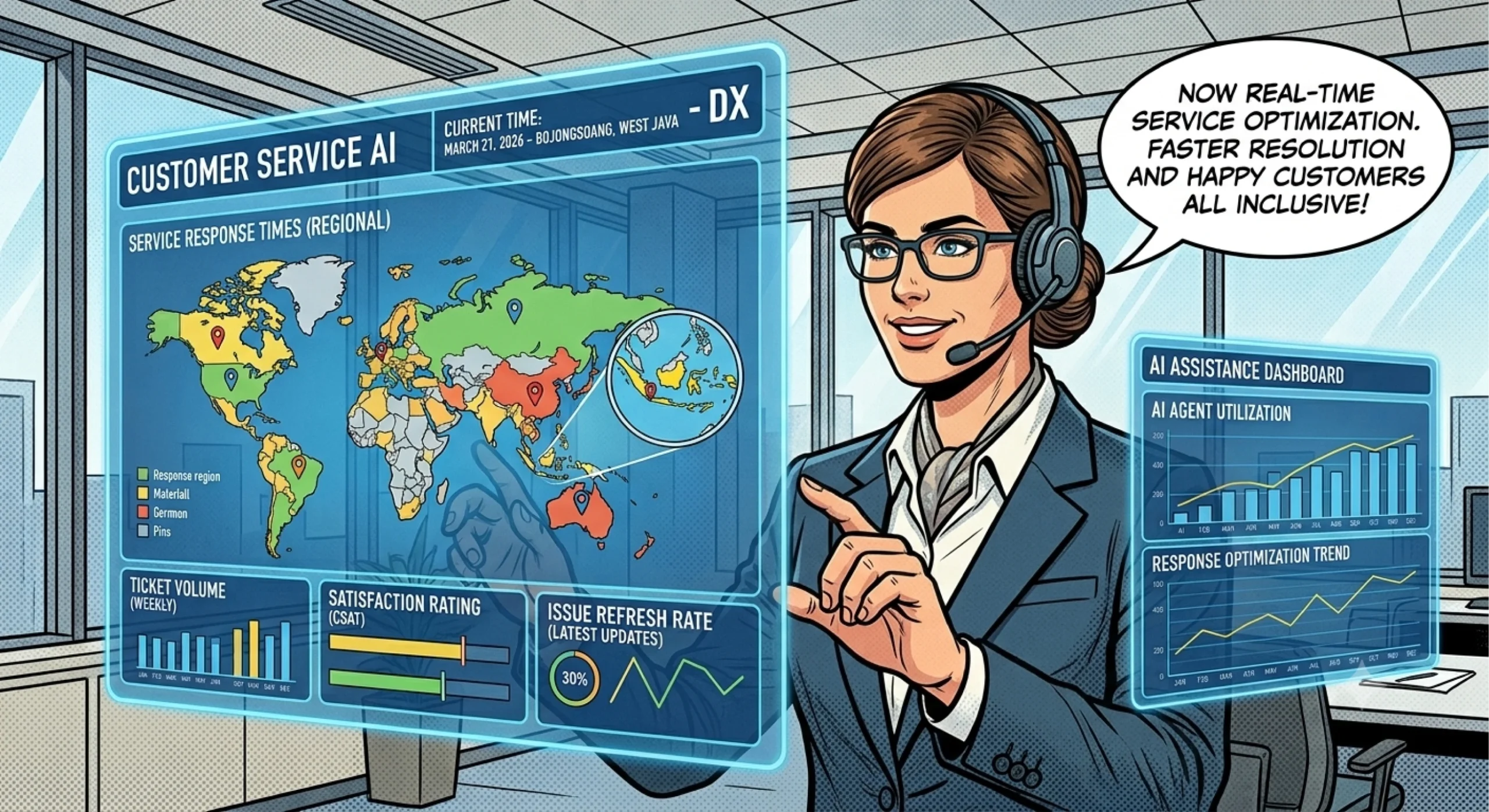
- AI Customer Service Agent for handling customer inquiries
- AI Project Manager for tracking schedules and project risks
Unlike traditional automation tools that execute predefined rules, modern AI employees can analyze data, understand context, recommend actions, and continuously improve their responses through learning and business knowledge.
This makes an AI workforce valuable not only for automating repetitive work but also for supporting strategic decision-making across departments.
Organizations increasingly view AI employees as collaborative digital teammates that complement human expertise instead of replacing it.
AI Workforce Benefits for Modern Businesses
Implementing an AI workforce delivers value beyond simple automation. Businesses gain greater visibility into operations while allowing employees to focus on higher-value activities.
Some of the most significant benefits include:
Increased Productivity
AI employees operate continuously without being limited by working hours. Routine administrative tasks such as data entry, report generation, document processing, and workflow monitoring can be completed around the clock.
This enables employees to dedicate more time to innovation, customer relationships, and strategic initiatives.
Better Decision-Making
Modern AI systems analyze large volumes of operational data within seconds. Managers receive actionable insights instead of spending hours preparing reports manually.
Real-time analytics help leaders identify:
- Project delays
- Budget overruns
- Sales opportunities
- Procurement bottlenecks
- Resource allocation issues
Faster access to reliable information leads to quicker and more confident decisions.
Consistent Business Processes
Human errors often occur during repetitive tasks. AI workforce platforms help standardize workflows by following predefined business rules while adapting to operational context.
This consistency improves compliance and reduces operational risks.
Cost Efficiency
Rather than expanding headcount for every operational challenge, businesses can automate repetitive work through AI agents.
Lower administrative workload allows organizations to scale operations more efficiently without sacrificing service quality.
Common Challenges When Building an AI Workforce
Although AI workforce adoption offers significant advantages, implementation requires thoughtful planning.
Integration with Existing Systems
Many businesses already use ERP, accounting software, CRM platforms, spreadsheets, and communication tools.
An effective AI workforce should integrate seamlessly with existing business systems instead of creating isolated workflows.
Solutions that combine AI with ERP functionality often provide a smoother implementation because business data remains centralized.
Employee Adoption
One of the biggest challenges is organizational change rather than technology.
Employees may worry that AI will replace their roles.
Successful companies position AI as a productivity assistant that removes repetitive work while allowing people to focus on creativity, collaboration, and problem-solving.
Training and clear communication are essential during adoption.
Data Quality
AI depends on reliable business information.
Poor-quality data can reduce the accuracy of recommendations and automation.
Organizations should establish good data governance practices before expanding AI across departments.
Security and Governance
As AI gains access to operational information, companies must ensure appropriate security measures, access controls, and compliance policies are in place.
Organizations should also define clear governance regarding AI-generated decisions and human oversight.
The National Institute of Standards and Technology (NIST) AI Risk Management Framework provides valuable guidance for implementing trustworthy AI responsibly.
Business Use Cases Across Industries
One of the greatest strengths of an AI workforce is its flexibility. Different industries can deploy specialized AI employees based on operational needs.
Construction Companies
Construction organizations manage complex projects involving contractors, procurement, scheduling, budgeting, and field operations.
AI workforce solutions can help by:
- Monitoring project progress
- Tracking procurement activities
- Identifying schedule risks
- Supporting budget management
- Coordinating project documentation
When integrated with construction ERP software, AI employees improve visibility across multiple projects.
Property Developers
Developers often oversee multiple construction projects simultaneously.
AI can assist with:
- Financial reporting
- Vendor management
- Resource allocation
- Executive dashboards
- Project forecasting
This allows leadership teams to make informed decisions using real-time project information.
Startups
Growing startups frequently operate with lean teams.
AI workforce platforms help automate repetitive administrative work such as:
- Lead qualification
- Customer support
- HR administration
- Financial reporting
- Marketing assistance
Automation allows startups to scale operations without significantly increasing overhead.
Consulting Firms and Agencies
Professional service firms manage numerous clients, deadlines, and documentation.
AI employees improve productivity by:
- Summarizing meetings
- Tracking deliverables
- Organizing project documentation
- Automating customer communication
- Preparing operational reports
Consultants spend more time delivering value instead of managing administrative tasks.
AI Workforce and ERP: A Powerful Combination
An AI workforce becomes significantly more valuable when connected with ERP software.
Traditional ERP systems centralize operational data but often require users to manually retrieve reports, interpret information, and initiate actions.
AI transforms this experience.
Instead of searching dashboards, managers can interact directly with intelligent AI employees that understand business context and provide actionable recommendations.
For example, an AI Finance Agent can identify unusual spending patterns, while an AI Procurement Agent can recommend optimal purchasing schedules based on historical trends.
This combination creates a proactive business management environment rather than a reactive reporting system.
Businesses interested in understanding how intelligent AI employees work alongside ERP can explore this detailed guide on AI employees and intelligent business teams.
How to Successfully Implement an AI Workforce
Organizations that achieve successful AI adoption usually follow a phased approach.
Identify High-Impact Processes
Begin with repetitive workflows that consume significant employee time.
Examples include:
- Customer inquiries
- Invoice processing
- HR administration
- Procurement requests
- Sales reporting
Quick wins build confidence across the organization.
Define Clear Business Goals
Measure success using practical KPIs such as:
- Reduced processing time
- Lower operational costs
- Faster response times
- Improved project delivery
- Increased employee productivity
Clear objectives make AI implementation easier to evaluate.
Expand Gradually
Instead of deploying AI across every department immediately, start with one or two operational areas.
As teams become familiar with AI collaboration, organizations can introduce additional AI employees across finance, operations, sales, and project management.
Keep Humans in Control
The most effective AI workforce models combine automation with human expertise.
AI supports decision-making, while people continue providing judgment, leadership, creativity, and relationship management.
This collaborative approach delivers better long-term outcomes than relying solely on automation.
The Future of AI Workforce
Artificial intelligence is rapidly evolving from isolated tools into coordinated digital workforces capable of supporting entire organizations.
Future AI employees will become more collaborative, context-aware, and deeply integrated with enterprise systems.
Businesses that begin adopting AI today are better positioned to improve operational efficiency, enhance customer experiences, and remain competitive as digital transformation accelerates.
Rather than asking whether AI will become part of business operations, the more relevant question is how organizations can implement it responsibly and effectively.
Exploring AI workforce solutions today allows companies to build a foundation for sustainable growth while empowering employees to focus on work that creates the greatest business value.
Conclusion
An AI workforce represents more than another automation technology—it is a practical way to improve productivity, streamline operations, and support smarter decision-making across the business. By combining specialized AI employees with integrated ERP capabilities, organizations can reduce repetitive work, enhance collaboration, and gain greater visibility into their operations. As AI adoption continues to grow, businesses that embrace an AI workforce thoughtfully and strategically will be better prepared for long-term success. If you’re evaluating how intelligent digital employees can support your organization, exploring modern AI workforce platforms is an excellent place to start.