
Digital transformation has become a strategic priority for businesses across every industry. Yet many organizations still struggle with fragmented systems, repetitive manual work, inconsistent reporting, and disconnected data. These operational challenges often slow decision-making, reduce productivity, and make it difficult to respond quickly to changing market demands.
A Business AI Platform addresses these problems by bringing artificial intelligence into everyday business operations. Instead of relying on separate tools for automation, analytics, customer service, and project management, companies can use a unified platform that connects business data, intelligent AI agents, and operational workflows.
Whether you’re managing construction projects, running a consulting firm, operating a startup, or leading a growing enterprise, understanding what a Business AI Platform offers can help you build a more efficient, scalable, and data-driven organization.
What Is a Business AI Platform?
A Business AI Platform is an integrated software environment that combines artificial intelligence, business applications, workflow automation, and operational data into a single system. Its purpose is to help organizations automate routine tasks, improve decision-making, and support employees with intelligent recommendations.
Unlike standalone AI tools that perform only one function, a Business AI Platform coordinates multiple AI capabilities across different departments. It acts as a central hub where digital employees, business data, and operational processes work together.
Typical capabilities include:
- Business process automation
- Intelligent workflow management
- AI-powered reporting
- Customer interaction support
- Project monitoring
- Financial analysis
- Procurement assistance
- Human resources support
Rather than replacing existing business systems, many AI platforms integrate with them to improve efficiency and deliver better operational insights.
Why Companies Need a Business AI Platform
Modern organizations generate enormous amounts of data every day. Customer interactions, financial transactions, project updates, procurement activities, and employee information all contribute to a growing pool of operational knowledge.
Without a centralized AI platform, much of this data remains underutilized.
A Business AI Platform helps organizations:
- Connect information across departments.
- Reduce repetitive administrative work.
- Improve operational visibility.
- Accelerate decision-making.
- Increase workforce productivity.
- Support continuous business monitoring.
- Deliver consistent business insights.
Instead of employees searching for information manually, AI continuously analyzes data and presents actionable recommendations when they are needed.
Core Components of a Business AI Platform
Although every platform has unique capabilities, most enterprise AI platforms share several essential components.
AI Employees
AI employees are specialized digital workers assigned to different business functions. Each one focuses on a specific operational responsibility while collaborating with other AI agents.
Examples include:
- Finance AI
- Procurement AI
- Sales AI
- HR AI
- Project Management AI
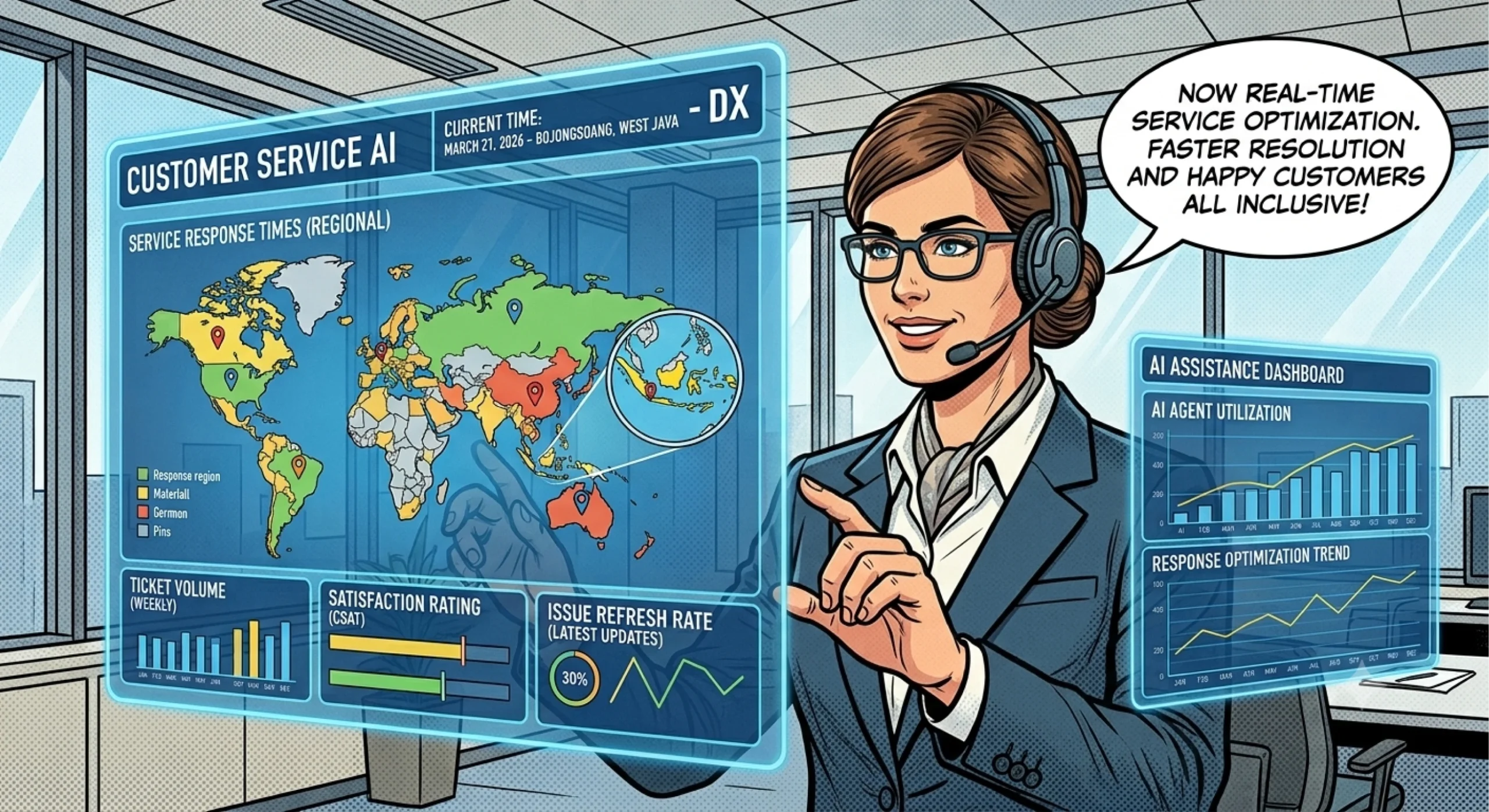
- Customer Service AI
Organizations unfamiliar with digital employees can explore AI Employees Explained to better understand how AI-powered team members support daily business operations.
Workflow Automation
Workflow automation coordinates routine business activities such as approvals, notifications, reporting, scheduling, and task assignments.
Instead of requiring employees to manually manage repetitive processes, the platform automatically executes predefined workflows while allowing AI to make context-aware recommendations.
Business Intelligence
Modern AI platforms continuously analyze operational data to identify trends, detect anomalies, and generate business insights.
Rather than simply displaying dashboards, AI explains what is happening and often suggests appropriate actions.
How a Business AI Platform Improves Daily Operations
One of the greatest advantages of a Business AI Platform is its ability to improve operational efficiency across multiple departments simultaneously.
Improving Operational Visibility
Business leaders often struggle to obtain accurate information quickly because data exists across multiple systems.
A centralized AI platform brings together information from:
- ERP systems
- CRM software
- Financial applications
- HR platforms
- Project management tools
- Customer communication channels
This provides a unified operational view that supports faster decisions.
Supporting Smarter Decision-Making
AI continuously evaluates incoming business information and highlights important changes before they become larger problems.
Examples include:
- Identifying delayed projects
- Detecting unusual financial transactions
- Predicting inventory shortages
- Monitoring workforce utilization
- Flagging procurement risks
Managers receive recommendations based on current operational data rather than historical reports alone.
Increasing Employee Productivity
Employees spend less time searching for information, preparing reports, or performing repetitive administrative work.
Instead, they can focus on:
- Strategic planning
- Customer relationships
- Innovation
- Business development
- Problem-solving
The platform acts as a digital assistant that supports employees instead of replacing them.
Business AI Platform and AI Agents
AI agents are among the most valuable components of modern business AI platforms.
Each AI agent performs a specialized operational role while collaborating with other digital workers.
Examples include:
- Sales AI qualifies leads and recommends follow-up actions.
- Finance AI analyzes budgets and spending.
- Procurement AI monitors supplier performance.
- HR AI supports workforce management.
- Project AI tracks schedules and risks.
Together, these intelligent agents create an operational ecosystem capable of supporting multiple departments simultaneously.
Businesses interested in specialized digital workers can also learn more about AI Agents for Business and how they improve everyday business activities.
The Importance of ERP Integration
The effectiveness of a Business AI Platform increases significantly when it integrates with Enterprise Resource Planning (ERP) systems.
ERP contains critical operational information including:
- Financial records
- Procurement data
- Inventory
- Human resources
- Customer information
- Project management
- Vendor records
When AI has access to real-time ERP data, recommendations become significantly more accurate and actionable.
For example:
- Procurement AI predicts material shortages.
- Finance AI detects abnormal spending.
- Project AI identifies scheduling risks.
- Executive AI summarizes business performance.
Rather than working with isolated information, AI supports decision-making using a comprehensive understanding of business operations.
Industries That Benefit Most
Business AI platforms provide value across many industries, particularly organizations with complex operations.
Construction
Construction companies coordinate contractors, procurement, project schedules, budgets, and field operations.
AI improves project visibility and operational coordination.
Property Development
Developers oversee multiple projects simultaneously while managing numerous stakeholders.
AI helps centralize planning, budgeting, and project reporting.
Consulting
Consulting firms handle documentation, collaboration, and client communication.
AI reduces administrative workload while improving operational efficiency.
Agencies
Marketing and creative agencies benefit from automated reporting, workflow management, and resource planning.
Growing Businesses
Startups and expanding organizations use AI platforms to scale operations without proportionally increasing administrative workloads.
Best Practices for Choosing a Business AI Platform
Selecting the right platform requires evaluating business needs rather than simply comparing software features.
Organizations should consider:
- Integration with existing systems
- Scalability for future growth
- Security and data governance
- Ease of use
- AI capabilities
- Workflow customization
- Reporting and analytics
A platform should fit operational processes while remaining flexible enough to evolve as the business grows.
According to the National Institute of Standards and Technology (NIST) AI Resource Center, trustworthy AI should prioritize transparency, reliability, accountability, and responsible governance throughout implementation.
Preparing for an AI-Driven Business Future
Artificial intelligence is becoming a fundamental component of modern business strategy rather than an optional technology.
Organizations that implement AI thoughtfully gain better visibility into operations, faster decision-making, and improved collaboration between employees and digital workers.
A Business AI Platform enables companies to unify business data, intelligent automation, and AI-powered decision support within a single operational environment. Instead of introducing isolated automation tools, businesses can create a connected ecosystem that continuously supports productivity and long-term growth.
If your organization is exploring ways to modernize operations and improve efficiency, understanding the role of a Business AI Platform is an excellent place to begin. You can also discover how the BuildX platform combines AI employees, workflow automation, and ERP integration to support smarter business operations.