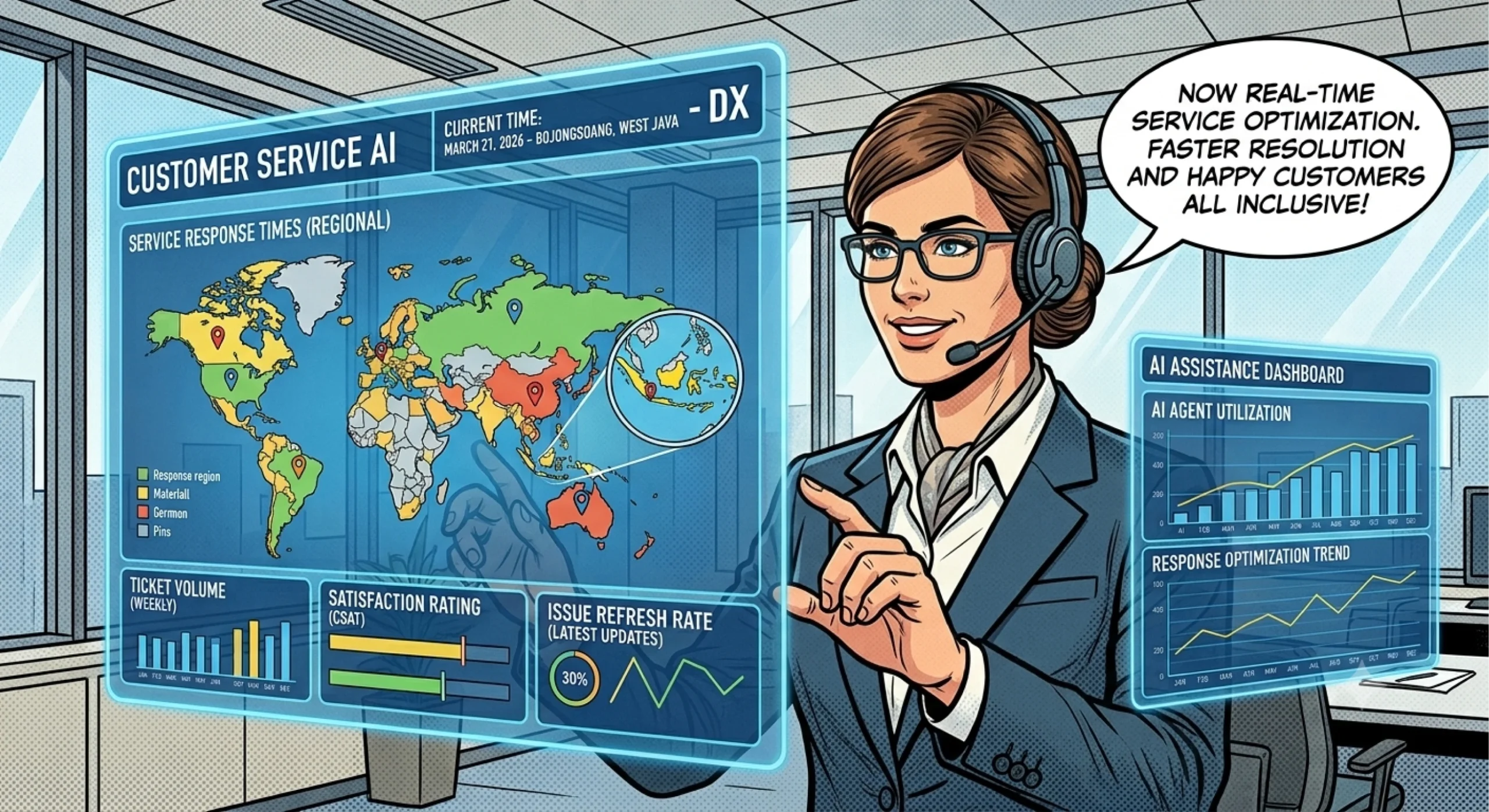

Businesses are facing increasing pressure to deliver faster results, improve customer experiences, and operate more efficiently without continuously expanding their workforce. At the same time, employees often spend valuable hours on repetitive administrative tasks instead of focusing on strategic initiatives that drive growth. As organizations seek smarter ways to scale operations, Virtual Employees have emerged as a practical solution.
Powered by artificial intelligence, virtual employees are transforming how companies manage everyday work. They can analyze data, automate repetitive processes, assist decision-making, and support multiple business functions around the clock. Rather than replacing human talent, they work alongside employees, helping teams become more productive and responsive.
This guide explains what virtual employees are, how they work, their benefits, common business applications, and why they are becoming an essential part of the modern workplace.
What Are Virtual Employees?
Virtual Employees are AI-powered digital workers designed to perform specific business tasks that traditionally require human effort. Unlike basic automation tools or chatbots, virtual employees can understand context, process information, learn from business data, and complete complex workflows with minimal supervision.
Depending on their role, virtual employees can assist departments such as:
- Finance
- Procurement
- Human Resources
- Sales
- Customer Service
- Project Management
- Executive Support
- Marketing
Instead of acting as standalone software, they integrate with existing business systems to continuously support daily operations.
Their primary objective is to reduce manual work while improving the speed and quality of business processes.
Why Businesses Are Adopting Virtual Employees
Organizations generate enormous amounts of operational data every day. Processing purchase requests, managing customer inquiries, tracking projects, updating financial records, and coordinating internal communication can quickly overwhelm employees.
Virtual employees help businesses manage these growing workloads by handling repetitive and data-intensive activities.
Some of the key advantages include:
- Increased operational efficiency
- Faster response times
- Improved business consistency
- Reduced manual errors
- Better resource utilization
- Continuous availability
- Scalable business operations
By automating routine responsibilities, employees gain more time for strategic planning, innovation, and customer engagement.
How Virtual Employees Work
Virtual employees combine several artificial intelligence technologies to support business activities.
Understanding Business Information
Using machine learning and natural language processing, virtual employees interpret business information from multiple sources, including ERP systems, CRM platforms, emails, documents, and project management software.
This allows them to understand operational context rather than simply following predefined instructions.
Automating Daily Workflows
Once connected to business systems, virtual employees can automate routine processes such as:
- Processing purchase requests
- Preparing operational reports
- Updating project progress
- Scheduling meetings
- Sending notifications
- Monitoring business performance
Automation reduces delays while improving workflow consistency across departments.
Providing Intelligent Recommendations
Virtual employees continuously analyze operational data to identify trends, risks, and opportunities.
For example, they may recommend:
- Adjusting project schedules
- Reordering inventory
- Investigating unusual expenses
- Prioritizing high-value sales opportunities
- Reallocating workforce resources
These recommendations enable managers to make faster and better-informed decisions.
Common Types of Virtual Employees
Modern organizations often deploy specialized virtual employees responsible for individual business functions.
Finance Virtual Employee
Supports financial operations by monitoring expenses, preparing reports, identifying unusual transactions, and assisting budgeting activities.
Procurement Virtual Employee
Tracks supplier performance, manages purchase requests, forecasts material requirements, and improves procurement efficiency.
Sales Virtual Employee
Assists sales teams by qualifying leads, updating CRM records, analyzing customer behavior, and identifying potential opportunities.
HR Virtual Employee
Supports recruitment, onboarding, workforce analytics, leave management, and employee information management.
Project Management Virtual Employee
Monitors project schedules, tracks milestones, identifies risks, and generates project performance summaries.
Customer Service Virtual Employee
Responds to customer inquiries, categorizes support requests, provides instant answers, and escalates complex issues when necessary.
Virtual Employees vs Traditional Automation
Many organizations already use automation software, but virtual employees offer significantly broader capabilities.
Traditional automation typically:
- Executes predefined rules
- Handles repetitive workflows
- Requires manual configuration
- Cannot easily adapt to changing situations
Virtual employees, however:
- Analyze business context
- Learn from operational data
- Adapt to business conditions
- Generate recommendations
- Support decision-making
- Work across multiple business systems
This makes them valuable contributors rather than simple automation tools.
Organizations interested in understanding intelligent digital workers in greater depth can read AI Employees Explained: How Intelligent Teams Transform Business.
The Role of Virtual Employees in AI Workforce
Virtual employees represent one of the most important building blocks of an AI workforce.
Instead of relying solely on human employees, organizations combine human expertise with AI-powered digital workers to improve operational capacity.
A modern AI workforce enables companies to:
- Scale operations without proportionally increasing headcount
- Improve collaboration between departments
- Reduce repetitive administrative work
- Increase operational visibility
- Deliver faster customer service
- Improve overall productivity
Businesses exploring this broader concept can also learn more through AI Workforce Guide: Benefits, Challenges, and Business Use Cases.
Best Practices for Implementing Virtual Employees
Successful adoption depends on planning rather than technology alone.
Organizations should:
- Identify repetitive, high-volume tasks.
- Define clear business objectives.
- Ensure high-quality operational data.
- Integrate AI with existing business systems.
- Train employees to collaborate with AI.
- Continuously evaluate performance and outcomes.
Introducing virtual employees gradually allows businesses to maximize value while supporting employee adoption.
According to the National Institute of Standards and Technology (NIST), organizations should implement AI systems with strong governance, transparency, reliability, and security to ensure responsible long-term use.
Preparing for the Future of Work
The future of work is no longer defined solely by larger teams or longer working hours. Instead, successful organizations are combining human expertise with intelligent digital workers to improve efficiency, agility, and decision-making.
Virtual Employees help businesses automate routine work, analyze operational information, and support employees across multiple departments. Rather than replacing people, they create opportunities for teams to focus on innovation, customer relationships, and strategic growth.
If your organization is exploring ways to modernize operations and build a smarter workforce, learning more about BuildX can help you understand how AI employees, intelligent automation, and integrated business platforms work together to support long-term business success.